
Will you chip in to support our nonprofit newsroom with a donation today? Yes, I want to support My Lynnwood News!

For Gardeners is a column written by and for local gardeners
Half a million people from all over the world visit the flower fields in the Skagit Valley each April, and even for locals, it’s a beloved spring tradition. The Skagit Valley Tulip Festival growers are excited to share this behind-the-scenes tour of their spectacular made-in-Washington event.
The Growers
Sister tulip fields, Skagit Acres (a brand-new tulip field in Skagit Valley), and Tulip Town are offering a special “Double Bloom” ticket where you can visit both farms with one ticket. Skagit Acres off I-5 sponsors extreme kite-flying and pictures with the Easter bunny over Easter weekend, but their gift shop, garden center, and café are open year-round. Tulip Town offers trolleys, a café and a canal that’s fun for all ages, plus some 8,000 Easter eggs for a kids’ event Easter weekend (and an adult Easter egg hunt, too!)
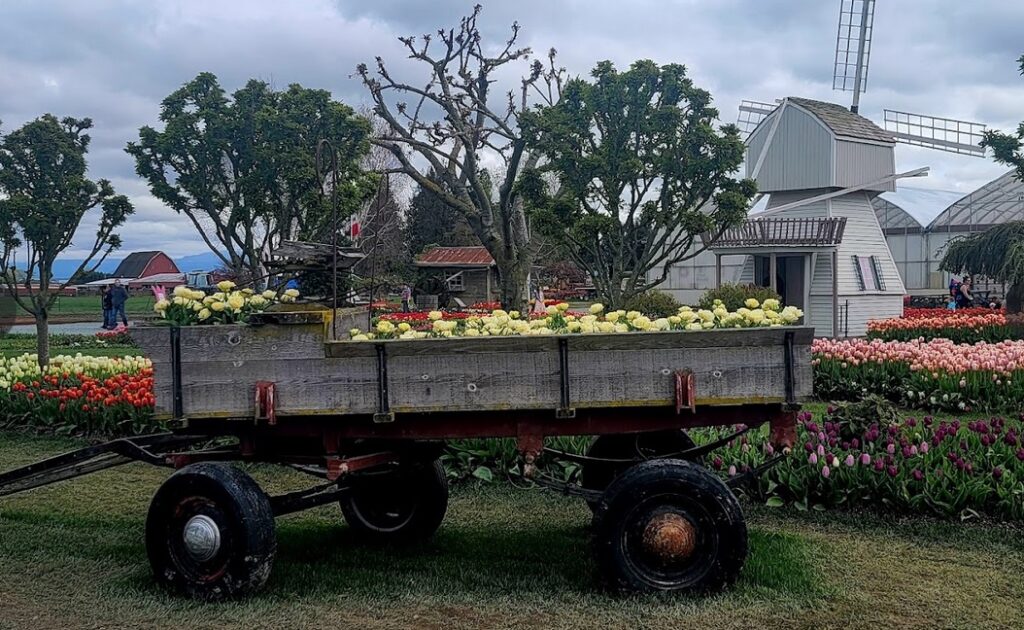
Garden Rosalyn invites you to view their nine acres of 30 varieties of tulips all planted by hand. It’s a relaxing place with artistic flower beds, a view of the Cascades and a gift shop.
Tulip Valley Farms lets you pick your own tulips – 140 varieties, and they feature an innovative night-blooming garden, something the Turkish people have planted for hundreds of years.
Roozengaarde is the granddaddy of all the farms. The Roozen family has grown tulips for more than three centuries in Holland. William Roozen emigrated to the US in 1947, and one of his 36 grandchildren, grandson Brent Roozen carries on the mantle here in Washington.
About the tulip business
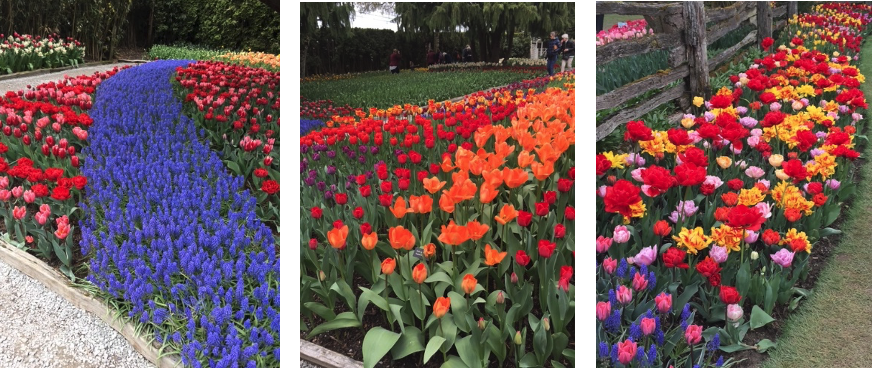
Roozen manages the display garden and bulb operation. The 2,000-acre farm has 500 acres planted at any one time in tulips and daffodils. Roozen and his team create a new design for the public display gardens each year and will plant more than one million bulbs by hand in the fall for a spectacular display in the spring.
Besides the one million bulbs in the display gardens, some 100 million bulbs get planted in the fields each year. The company will ship tens of millions of blooms a year, more tulips than daffodils.
Roozen also runs the Washington Bulb Company, the largest bulb grower in the U.S.
The company only plants tulip bulbs in the same place once every five years. The non-bulb acres sit fallow for five or six years, planted with cover crops such as peas, grass or clover. That way, the soil is in optimum condition when it’s time to plant the bulbs, so Roozengaarde’s blooms and bulbs go out in peak health.
Holland is normally the top tulip-growing country in the world, but they had two bad climate years in 2023-24, Brent says, and the Skagit Valley was able to step up. Our location near the ocean moderates our cool, temperate climate, which is perfect for growing bulbs.
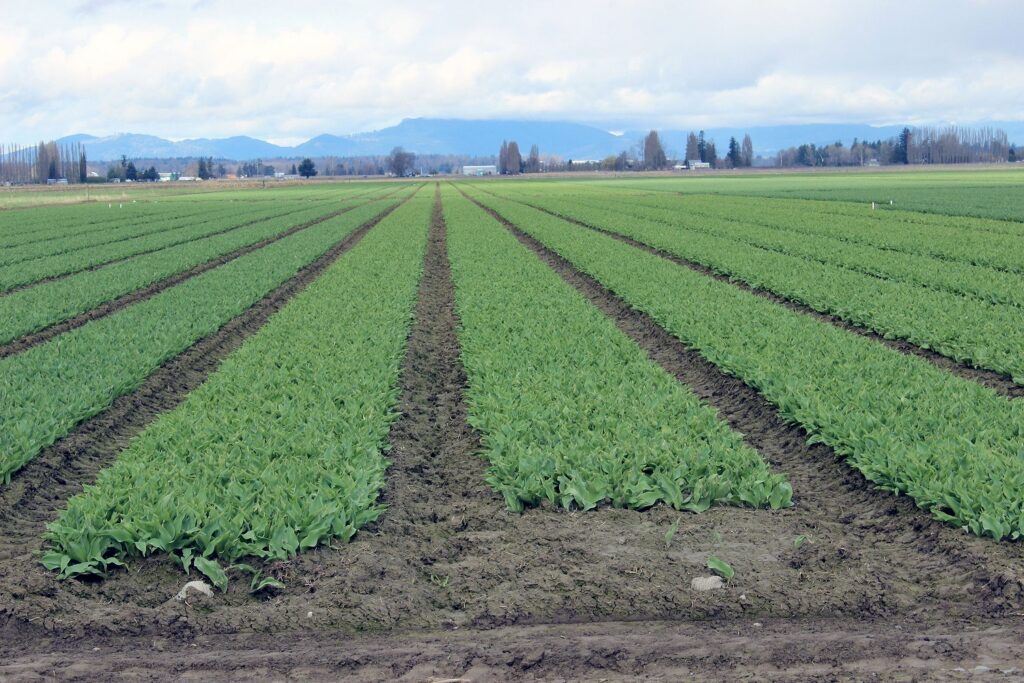
Over the years, Washington’s growers have learned from Holland’s innovations in the bulb-growing business. Roozengaarde recently started planting the bulbs densely in 40-inch wide rows instead of stringing the plants out in narrow rows. The dense plantings save on water and make mechanized planting and harvesting easier, and when in bloom they make for spectacular color displays.
Year-Round but Seasonal
We can’t grow tulips year-round in our home gardens, but the Washington Bulb Company can. The bulbs live in trays in a cooler, creating their own false winter with temperatures that go from 45 degrees down to 33 degrees and back to 45. Then they enjoy fake spring in the greenhouse for a few weeks.
Manipulated seasons are important if you want to deliver tulips by Valentine’s Day! Think about it. Our gardens are just now sprouting tulips at the end of March in Washington, but to get them to people’s sweethearts for Valentine’s Day, the growers have to force them in heated greenhouses; they then have to deal with shipping to the East Coast in freezing temperatures and snowstorms.
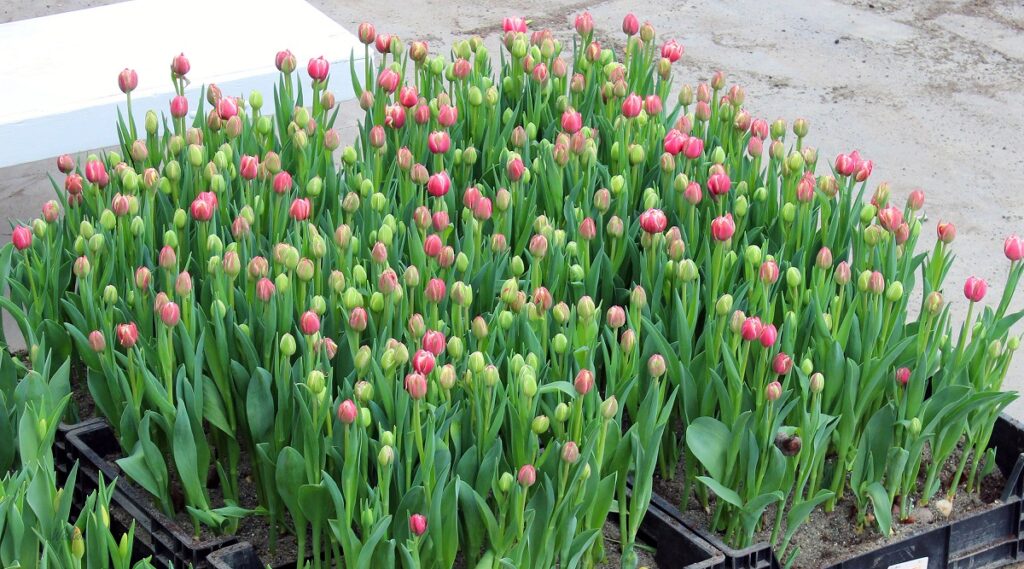
But what if you want tulips for Mother’s Day in May? You can slow them down by refrigerating them. If you want your personal blooms to last longer than a week, you can put them in the refrigerator or out on the patio at night.
Year-round blooms are a bigger challenge. No matter how much you try to fake out the bulbs, Washington-grown bulbs will not bloom in October for fall, November for Thanksgiving or December for Christmas. To raise blooms in the fall and winter months, Roozen imports bulbs from the southern hemisphere – Australia and New Zealand mostly – because their DNA is programmed to bloom in those months. It’s science.
Bulbs or Blooms?
Why are we talking about blooms when it’s a bulb company. Well, as they say, you can’t have one without the other, or which came first – the bulb or the bloom?
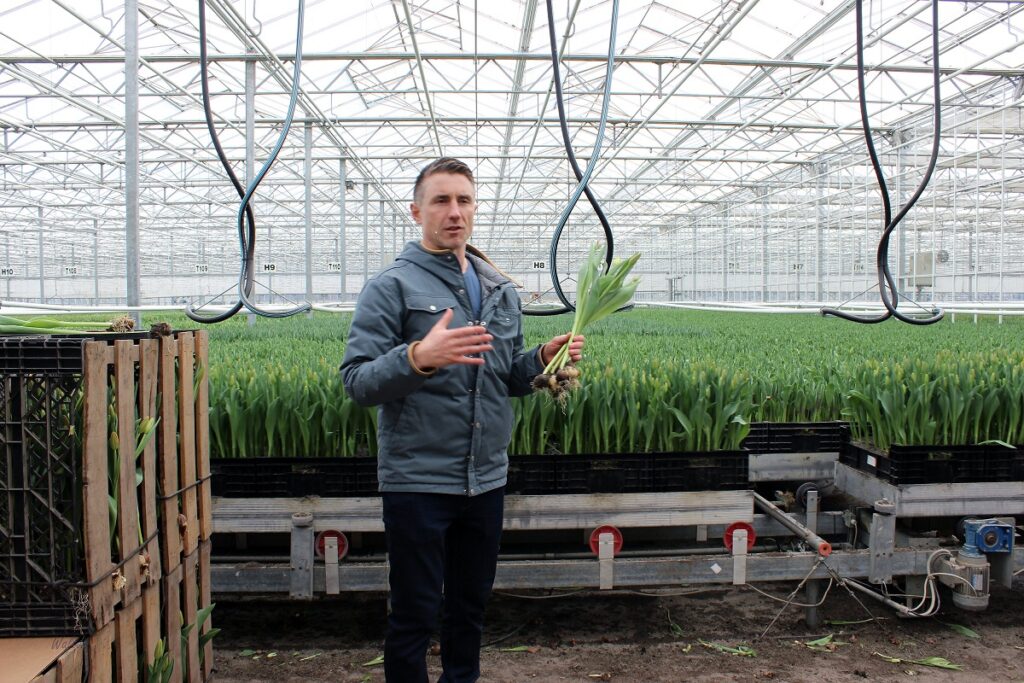
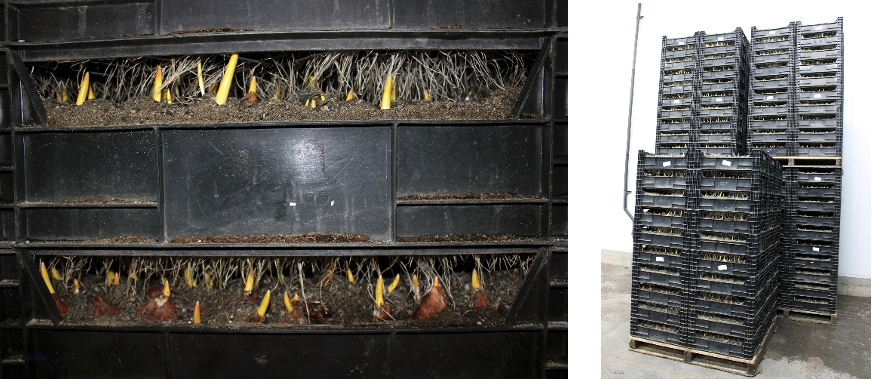
Years ago, the Washington Bulb Company used to send out 85% bulbs and 15% blooms; now those figures have flipped. To get the bulbs to bloom, Roozen plants the dug-up bulbs in a special growing medium in trays, 100 bulbs to a tray, with trays stacked to the ceiling in the cooler. A few weeks before the blooms are needed, his staff moves the sprouted bulbs to the greenhouse.
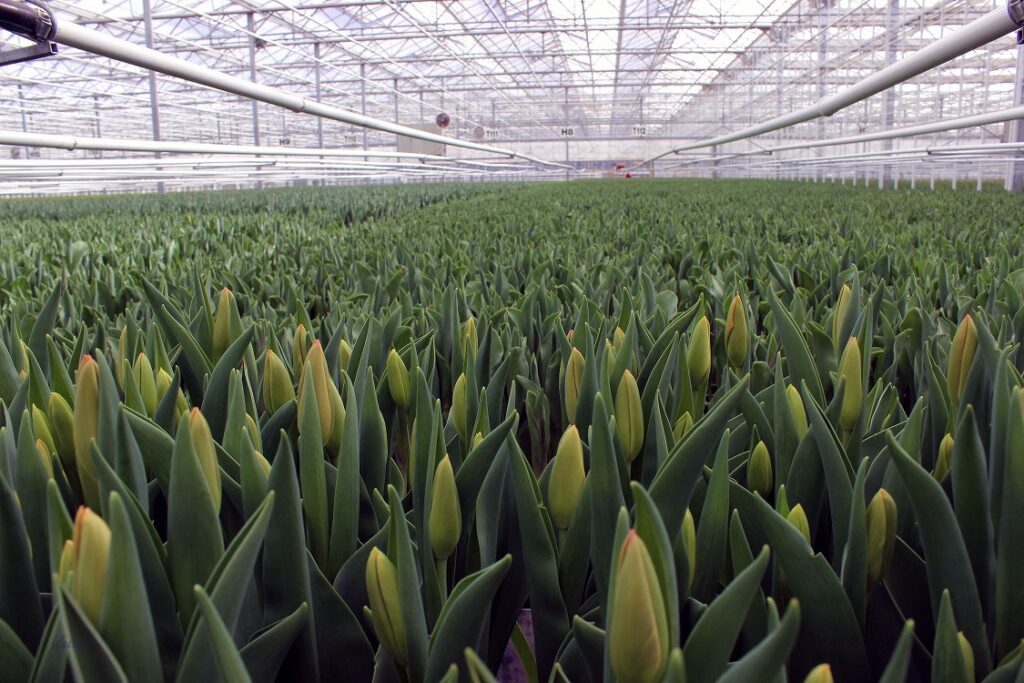
The growing plants live in a greenhouse that extends as far as the eye can see. They travel constantly on automated conveyor belts, and workers pull them at just the right time.
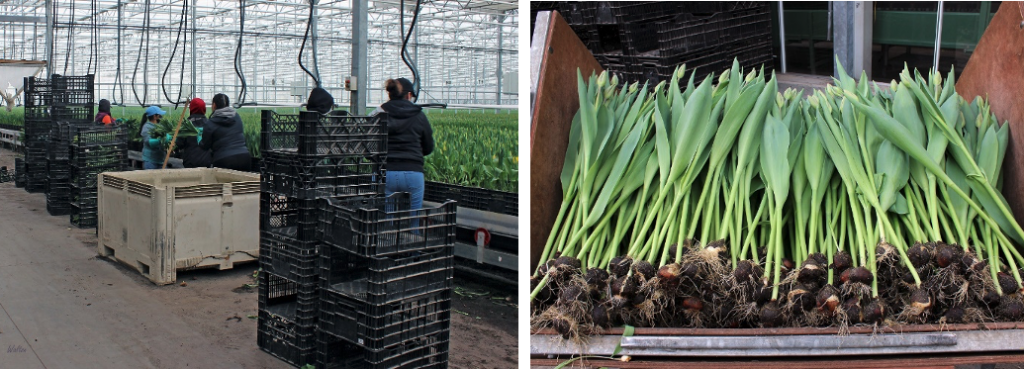
Workers lay the stems with bulbs attached onto a conveyor belt inside a cold room. A machine cuts off the bulbs and hangs the foliage upside down so the stems stay straight.
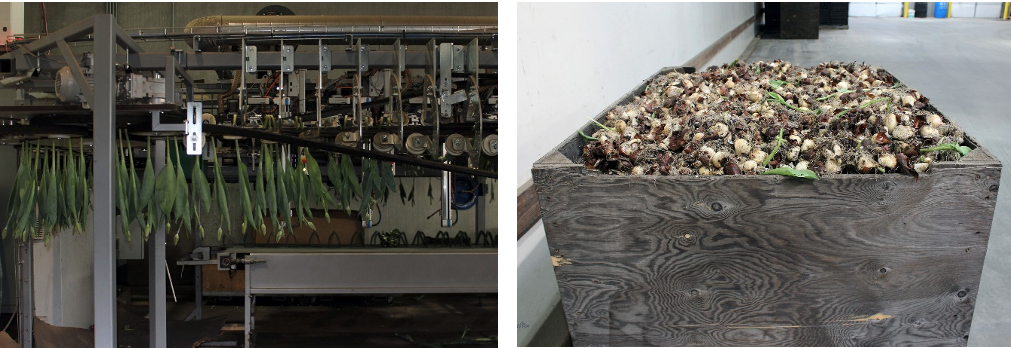
Meanwhile, these bulbs get a new life. They’ll be planted in the fields, but they won’t produce blooms until the second year.
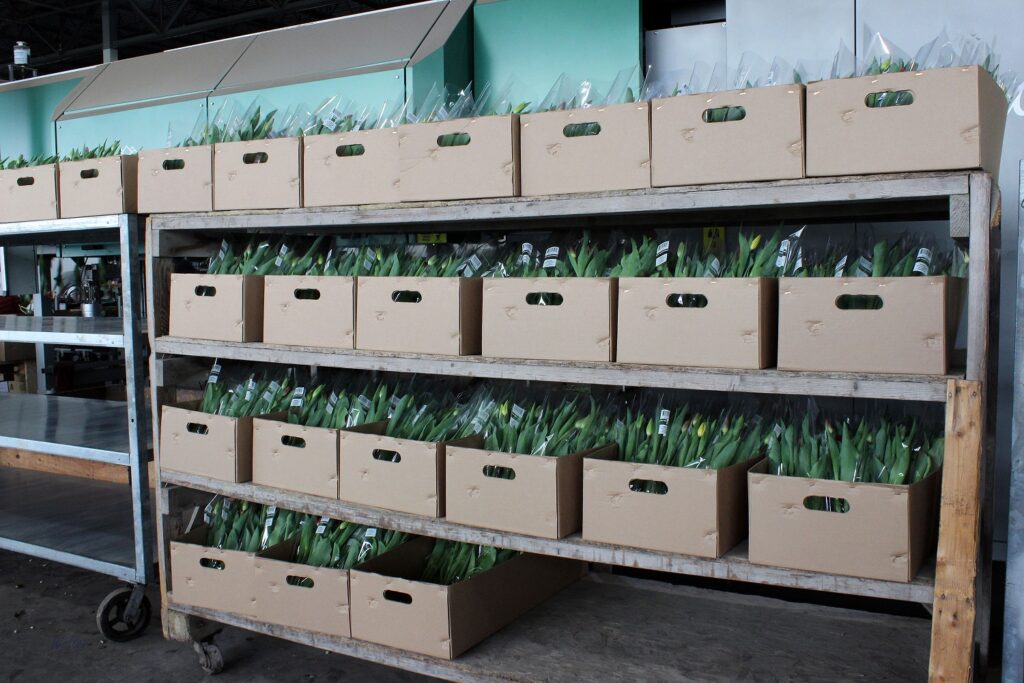
After the bulbs are cut off, each stem goes through an X-ray machine to make sure it’s healthy. The workers bunch the cut stems by color and number and wrap them in whatever sleeve (paper or plastic) the customer orders – 12 stems to a bunch, 24 bunches to a box, 50 million stems a year!
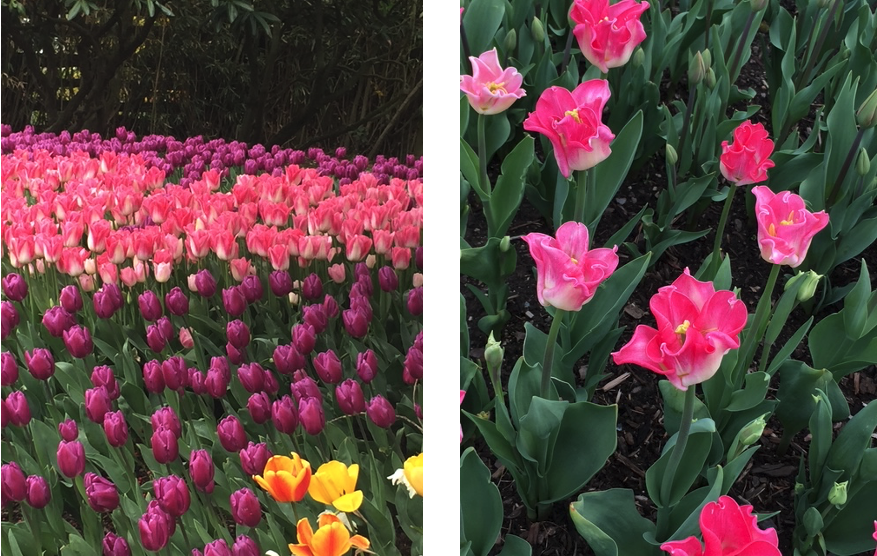
Following the festival, the flowers in the demonstration gardens get their own special treatment: Once they bloom, workers top them (cut off the flower heads) to prevent disease and because the foliage is what feeds the bulb. Strong foliage ensures a high bulb success rate.
You can buy both blooms and bulbs in the gift shops at all the farms. The Skagit Valley Tulip Festival runs through the month of April. Associated events include:
April 5-11 in Sedro-Woolley and April 8 in Anacortes: an art exhibit featuring 30 years of original festival artwork.
April 5 in La Conner: a parade and children’s activities
When you see those neatly wrapped tulips or daffodils in the store, you no longer have to imagine how they got there. If you’re in Washington, they were probably picked that very morning.


Real first and last names — as well as city of residence — are required for all commenters.
This is so we can verify your identity before approving your comment.
By commenting here you agree to abide by our Code of Conduct. Please read our code at the bottom of this page before commenting.