
Will you chip in to support our nonprofit newsroom with a donation today? Yes, I want to support My Lynnwood News!
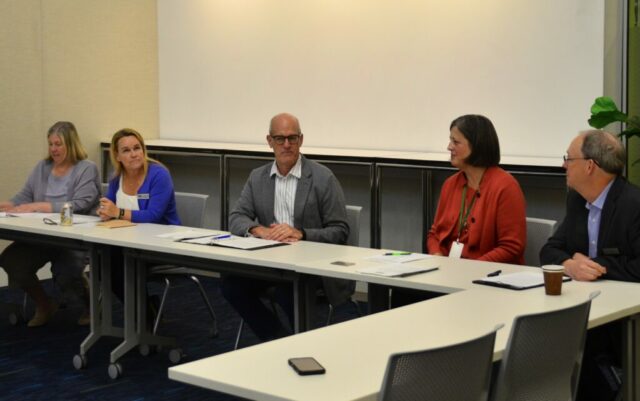
U.S. Rep. Rick Larsen Friday met with members of the Verdant Health Commission and other local health care providers at the Verdant office in Lynnwood to discuss the impact of potential federal cuts on health care in Snohomish County.
The discussion centered around two primary changes to health care under the One Big Beautiful Bill Act (H.R.1) signed into law by President Donald Trump in July: potential expiration of enhanced premium tax credits (PTCs) under the Affordable Health Care Act (ACA) and significant cuts to Medicaid funding. PTCs lower the cost of government-provided insurance for low-income earners.
In Northwest Washington, people relying on PTCs could face a net premium increase of 65%. Unless Congress acts, Larsen said an estimated 80,000 Washington residents could forgo health coverage at the end of 2025 due to “sticker shock.”
In Snohomish County in 2023, 30% of babies were born into families using Medicaid as their primary health coverage, Larsen said. About 70% of patients at Swedish Hospital in Edmonds rely on government-funded health care, Verdant Interim Superintendent Sarah Zabel said.
“Medicare is not health care for other people,” Larsen said, “It’s health care for friends and neighbors.”
The One Big Beautiful Bill imposes new requirements and tightens eligibility for Medicaid and PTCs – with non-resident immigrants and refugees losing coverage almost entirely.
Over the next few years, enrollees could face increased copayments as the federal government introduces caps on the amount of states permitted to finance Medicaid. Non-residents with a household income less than 100% of the federal poverty level are disqualified from PTCs and low-income families must pay back excess tax credits over their permitted limit if they misestimate income.
The Verdant Health Commission is South Snohomish County’s publicly-owned hospital district. It serves nearly 200,000 residents by funding nonprofits that provide free or low-cost health care. In turn, the federal cuts could result in reduced services, with patients receiving low-cost and affordable services taking the brunt.
“Patients would get sicker and then show up in an emergency department, and we already have overcrowded emergency departments and a lack of inpatient beds,” Zabel said. “It just continues to build on current issues in health care.These will not alleviate them, they’ll make them much worse.”
Lahai Health, one of Verdant’s free clinic partners, provides dental, medical and mental health care for low-income earners and uninsured people. Executive Director David Eller said he anticipates a potential doubling of uninsured people in its service area, jumping from 6% to between 15-16%.
Lahai is already operating at capacity, Eller said, with a two-month waiting list for primary care appointments and a six-month wait for dental care. Community surveys indicate that if Lahai Health were not available, 56% of their patients would skip care entirely, leading to untreated conditions that become more severe and costly.
Lahai is fully operated by volunteer health care professionals. The volunteer pool will likely shrink as local hospitals reduce wages and staffing amid federal cuts, Eller said.
Larsen said there’s a desire in the state government to soften the blow of the cuts, with some members of Congress hoping to extend the credits.
Regarding the massive cuts made to Medicaid under what Larsen calls the “big ugly law,” the choice of whether to maintain health care services for those populations will be “kicked to the state,” he said. State governments will have to decide whether to backfill the funding being removed. Washington hasn’t yet made that decision, but Gov. Bob Ferguson is “working through” it, Larsen said, with a short legislative session potentially slated for March to hatch a plan.
With steep challenges on the horizon, Verdant budgeted $6.5 million for community investments in 2026, Verdant Commission President Karianna Wilson said. Based on public feedback, the commission plans to focus funds on three priorities: Access to health care, adolescent and child mental health, and food security.
Late this year or early next year, Verdant plans to expand its community outreach efforts to better understand where to allocate investments and is in active pursuit of new private and public partnerships in hopes of expanding and diversifying services.
— Contact Ashley at ashley@myedmondsnews.com.

Real first and last names — as well as city of residence — are required for all commenters.
This is so we can verify your identity before approving your comment.
By commenting here you agree to abide by our Code of Conduct. Please read our code at the bottom of this page before commenting.