
Will you chip in to support our nonprofit newsroom with a donation today? Yes, I want to support My Lynnwood News!
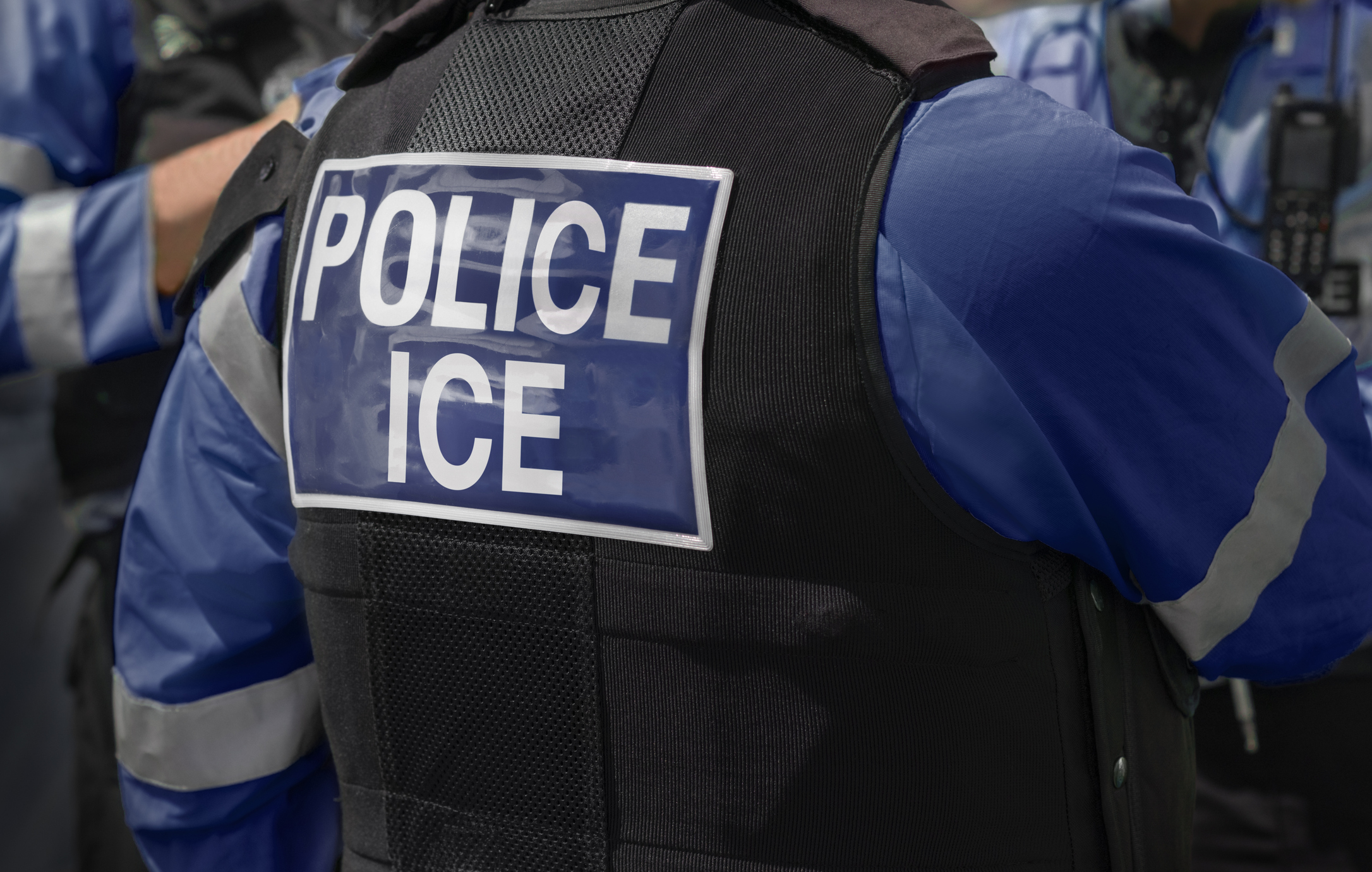
Jesse wanted to do something. She couldn’t stand by and do nothing during the federal Immigration and Customs Enforcement (ICE) raids in Snohomish County.
She made a few calls, got trained and is now a member of fast-growing hyper-local rapid response teams who function as legal observers to document what is happening with ICE in Mountlake Terrace in real time.
(Jesse is not her real name. She requested anonymity for her safety.)
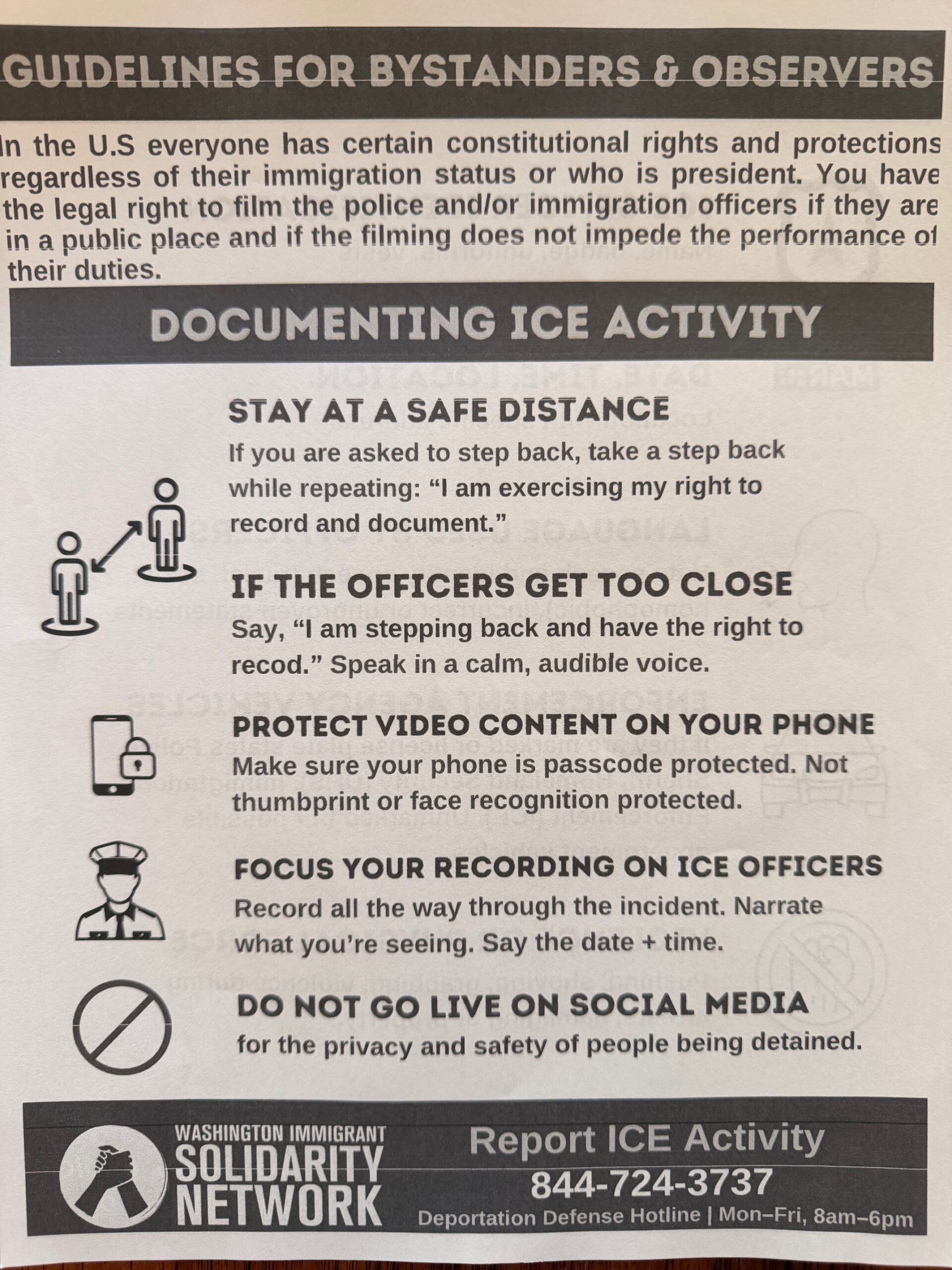
“We aren’t agitators,” she said. “We don’t blow whistles or scream at officers. We are there to calmly document what is happening on the ground. We remain calm. We use our phones to record video of the area and the situation. We are also there to help families after ICE leaves.”
Jesse is not alone. Just this week, 10 new people enrolled in the Mountlake Terrace team. A new group launches in Edmonds next week. Lynnwood is covered by the Snohomish County group. On Sunday, Jan. 25 at Shorewood High School in Shoreline, more than 70 organizations will come together under the banner of a ‘Festival of Activities’ to share information about getting involved.
The Washington Immigrant Solidarity Network (WAISN) runs the Rapid Response program. Interested residents sign up for in-person or virtual training, go through a background check, then get assigned to a rapid response team for a specific area like Mountlake Terrace that communicates through a signal chat group.
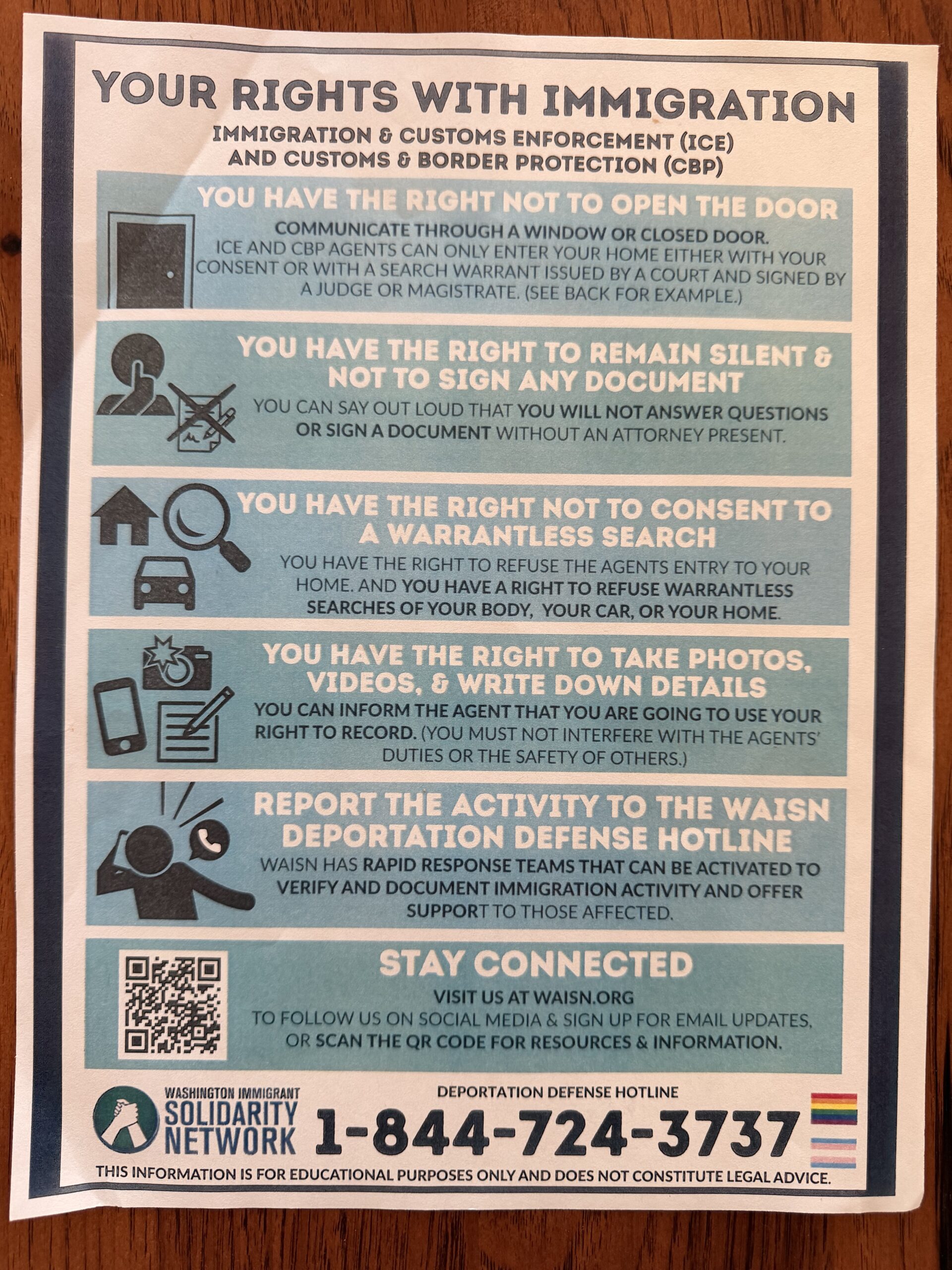
Responders learn to remain calm, identify the difference between ICE and other law enforcement, understand the basics of immigrant rights, what questions to ask, how to protect the contents of their phone, and even how to hold a phone for best documentation.
How it works
“ICE is fast,” Jesse said. “They are in and out in under three minutes.”
When residents see something, they are instructed to call the reporting number, 1-844-724-3737. Information is received – where, when and what is happening are the most important pieces of data. They also ask callers to describe what they are seeing.
The coordinator sends information to the communications team and the closest Signal chat group. Signal is a private, end-to-end encrypted app that allows users to communicate privately and securely.
Members of the chat group go to the scene as quickly as possible and determine if it is a real ICE situation and start the legal observer process of documentation.
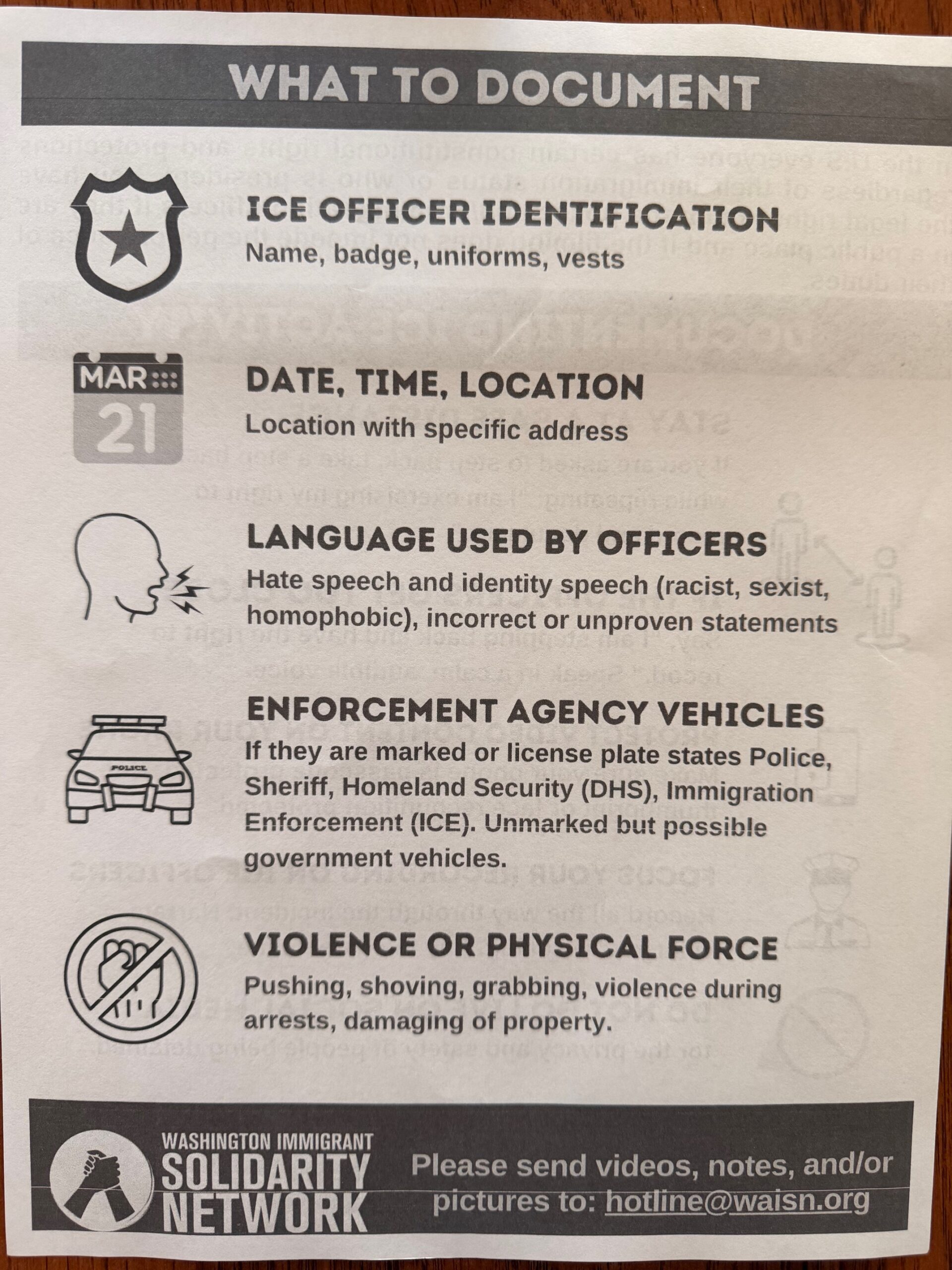
Each respondent has a role: Talk calmly with the ICE agent about the situation, record a wide shot of the entire scene and situation, and record tight shots to document what is happening, where and who is involved. One team member communicates with the detainee, asking questions like, “Who can I call? Do you have a child at school? Do you want me to move your car?”
Abandoned vehicles after ICE raids are a reality. It happened recently at the Mountlake Terrace Grocery Outlet and during ICE raids Jan. 15 in Shoreline.
“Sometimes they are the sole breadwinner of the family, so we connect family with services,” Jesse said.
Because ICE moves so quickly, rapid response teams don’t always make it in time. “That’s why we are recruiting more members. With more people close by, there’s a better chance of getting there in time,” Jesse said.
Other tasks
The rapid response team in Mountlake Terrace is made up of everyday people. Health care industry workers, moms and dads, and interested people. When they aren’t responding to an ICE raid, they’re doing outreach. When we met, Jesse had just come from the local mosque in Mountlake Terrace where she provided education about immigrant rights. They have fliers in 47 languages.
To learn more about the program, contact WAISN or go to the Festival of Activism at Shorewood High School, Sunday, Jan. 25 from 10 a.m. to 2 p.m..


Further information about Snohomish County. Rapid response can be obtained by emailing SnohomishImmigrationAdvocacy@gmail.com, where you can be linked to your local team coordinators, and given further information about training.