
Will you chip in to support our nonprofit newsroom with a donation today? Yes, I want to support My Lynnwood News!
It’s winter here in the Pacific Northwest and the garden is still resting, but it’s time for gardeners to get busy planning for spring and summer gardening.
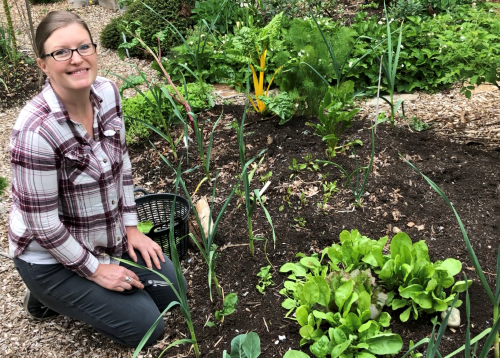
I love shopping for seeds in the dark days of winter and imagining the lush spring and summer garden in full production. Before you go wild with seed purchasing, here are a few things to consider, plus tips on indoor seed-starting and direct seeding your spring garden, as well as helpful resources to get you growing.
The Benefits of Growing from Seed
There are many benefits of purchasing seed versus transplants. Here are just a few:
- Cost: Pre-grown garden starts are expensive. A six-pack of starts can cost you as much as an entire seed packet with 30 or more seeds.
- Quantity. As above, purchasing seeds gains you a lot more plants. This is especially important for the produce that you enjoy the most or use a lot of, like lettuce and greens. Along with peas, lettuce and greens are the easiest things to grow from seed.
- Success. The success rate of plants started in the garden from seed is improved due to better acclimation and root development. Transplanting always causes some stress to plants. Purchasing local seeds ensures the plants grown from those seeds are already acclimated to your climate.
- Variety. Unique and rare heirlooms, organic and many unique varieties are available from seed that are not available as starts in your local nursery. Nurseries can only carry so many varieties and often growers choose only popular varieties that buyers will recognize.
Got Old Seeds?
They may still be viable. Vegetable and herb seeds have an average life span of three years, with many things lasting much longer. Some of the seeds with a short life span are onions and corn, lasting only one to two years. Check out this post to learn how to easily test your older seeds for viability.
Choosing Seeds
When choosing what vegetable seeds to purchase, it is important that you purchase seeds that are local to your growing climate. Here in the Pacific Northwest, I choose seed from growers in Washington and Oregon. The seeds from these companies are from plants grown successfully in our region, meaning they are adapted to our climate conditions and will have better success rates in your garden.
Before choosing a new-to-you seed company, it’s important to do your own research:
- Do they grow their own seed or purchase from others?
- Do they have a commitment to sourcing from local growers?
- What are the growing practices? Do they grow organically or have a commitment to sustainable agriculture?
Buyer beware: There are a few “seedy” sellers on marketplace sites like Facebook and Etsy that often purchase from other companies and repackage it as their own. Some of these companies do not provide growing information or date their seed packets so you have no guarantee of the age of the seed. Good local seeds are well worth the price.
Free Seeds! Find a Local Seed Swap or Seed Library
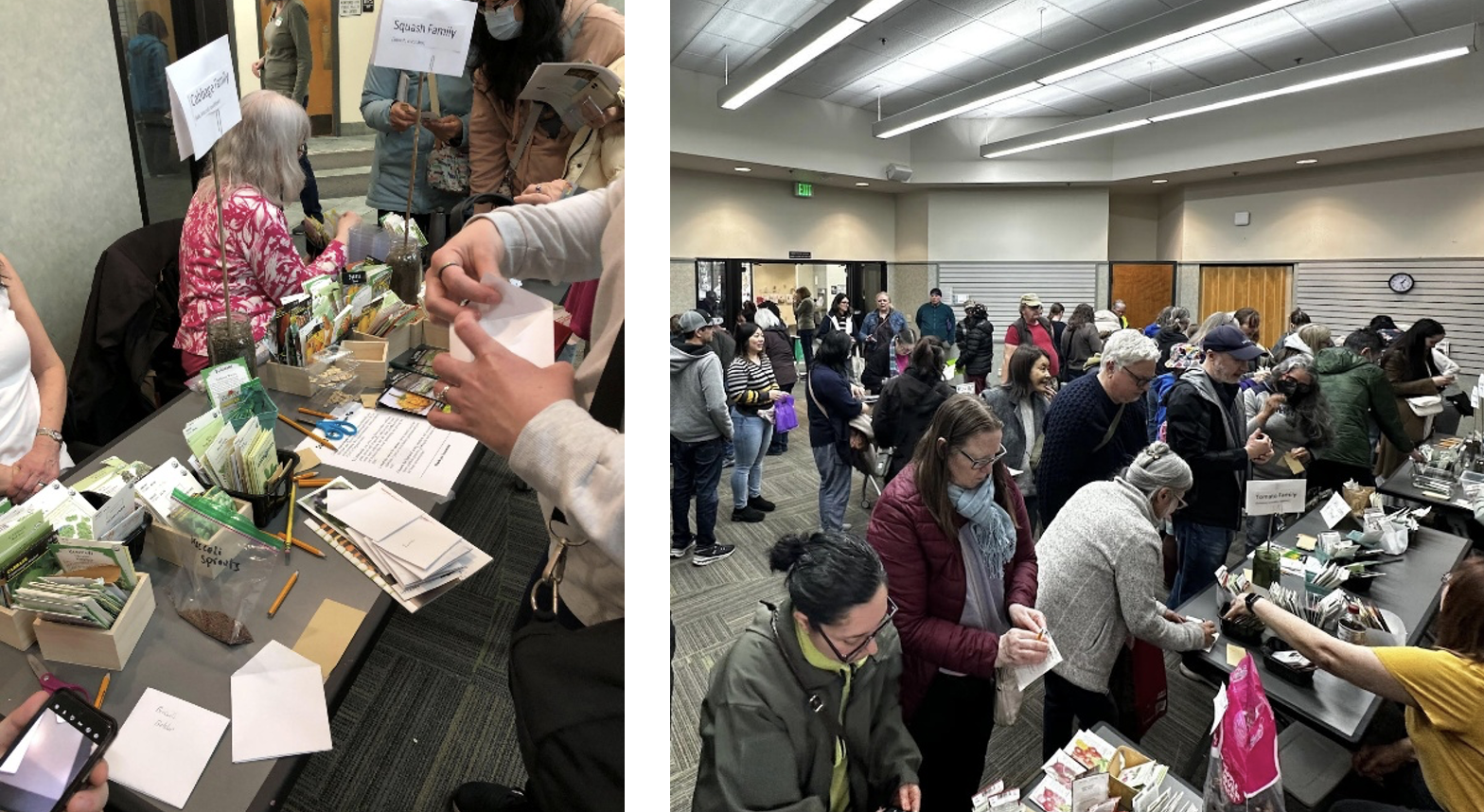
A seed swap is a community event where gardeners come together to share seeds with one another. This is also a great way to meet other gardeners and ask gardening questions, sharing success stories and lessons learned.
The Lynnwood Seed Swap is coming up from 1-4 p.m. Sunday, March 8 at the Lynnwood Library and is a FREE event. You can bring purchased or saved seeds to swap, but it is not required. Thanks to local businesses and generous seed companies we will have enough seeds for everyone to take home. There is also a kids table with crafts and coloring, a raffle to enter to win exciting gardening things, plus lots of free gardening resources. Learn more about the event here.
Plan Now for Summer Crops and Indoor Seed Starting
Plan to also purchase your summer seeds now, like tomatoes, so you are ready to start the seeds indoors. Some plants require a longer growing season and must be started indoors six to eight weeks ahead of your first frost date then transitioned out into the garden after the temperature is suitable.
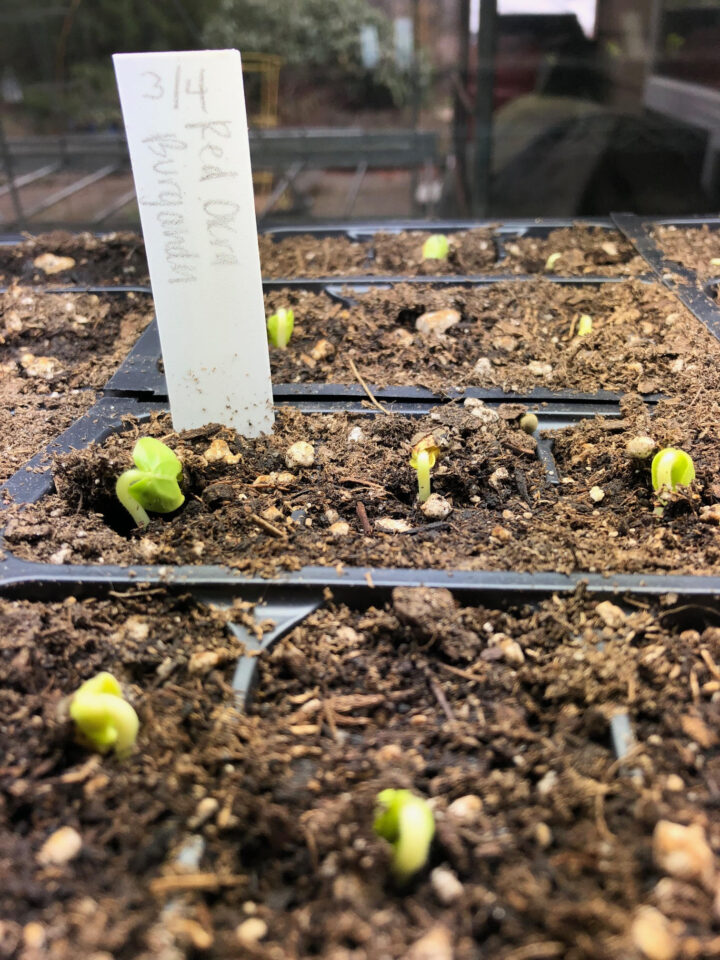
Tomatoes and peppers are examples of warm weather crops that need to be started indoors in late winter to reach maturity by the end of our short growing season. I start my tomato seeds between March 1-15.
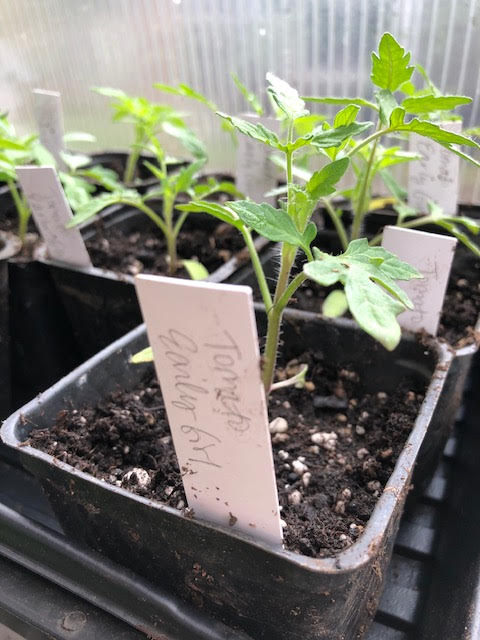
New to indoor seed-starting and not sure how to begin? Learn more about indoor seed- starting here. Need help deciding what to start indoors versus directly seeding into the garden? See the resource list below for links to my favorite planting guides from Territorial Seeds and Uprising Seeds.
Let’s Sow Some Spring Seeds
Once you’ve decided which crops you want to grow and purchase your seeds, it’s time to get to sowing.
Sowing seeds directly in the garden into prepared soil is called direct seeding. Some crops do best when seeded directly into the garden, versus getting transplanted, including all root crops.
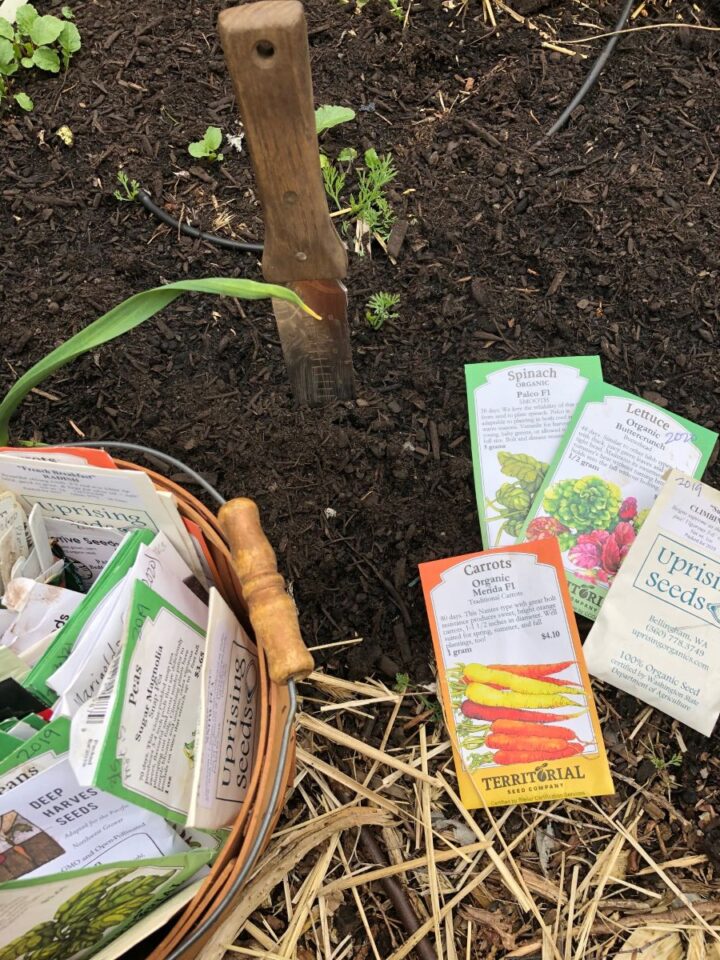
Prepare Your Garden Beds:
- Get a soil test! (check with your local conservation district – see resources below)
Why test your soil? If you are unsure what nutrients your soil needs — prior to adding nutrients that could run off and contaminate ground water and local streams
- Cut cover crops at soil surface and chop into soil using a shovel. This may take repeating as roots may continue to grow.
- Add 1/2 inch to 1 inch of fresh compost to surface
- Let soil rest for a couple of weeks before seeding/transplanting in — time for the cover crop to decompose (aka green manure)
What crops to direct-seed in early to mid-March:
- Peas – snap & snow varieties
- Lettuces & salad greens (arugula)
- Spinach
- Bok choi
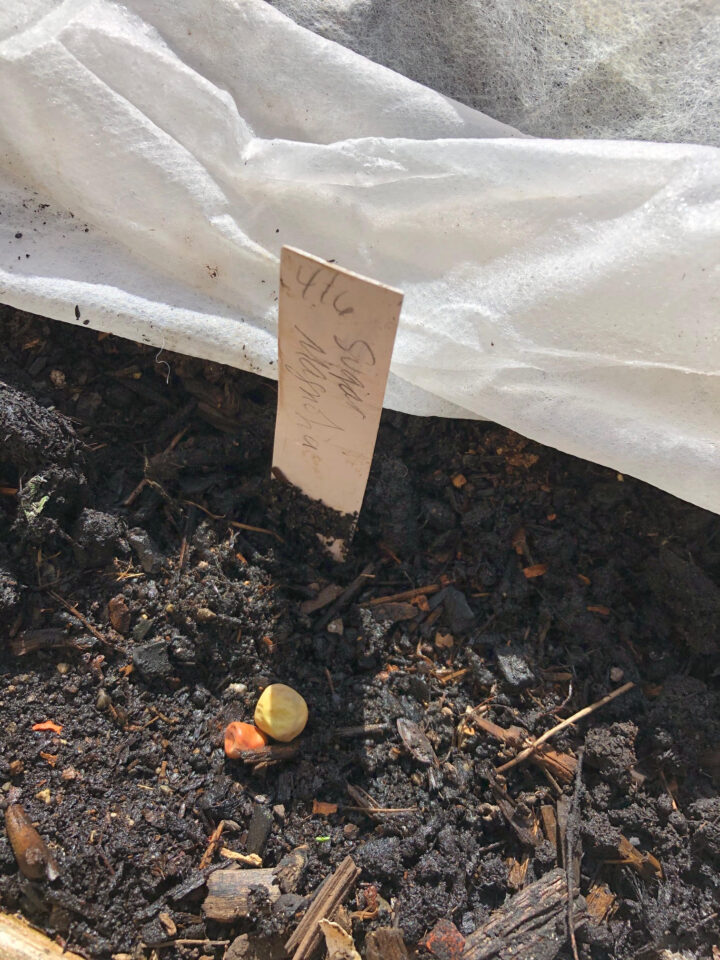
What to direct seed beginning mid-March:
- Potatoes – grow potatoes from seed potatoes versus seed and plan to plant around St Patrick’s Day! Many seed companies and local nurseries sell seed potatoes.
- Kale, Swiss chard, collards
- Herbs: Chamomile, feverfew, cilantro
What to sow early to mid-April:
- Carrots* (germination is best when soil temps are over 50 degrees)
- Parsnip* (germination temps same as carrots)
- Beets*
- Radish*
- Turnip*
*Direct-seed only – typical of root crops that don’t like their roots disturbed.
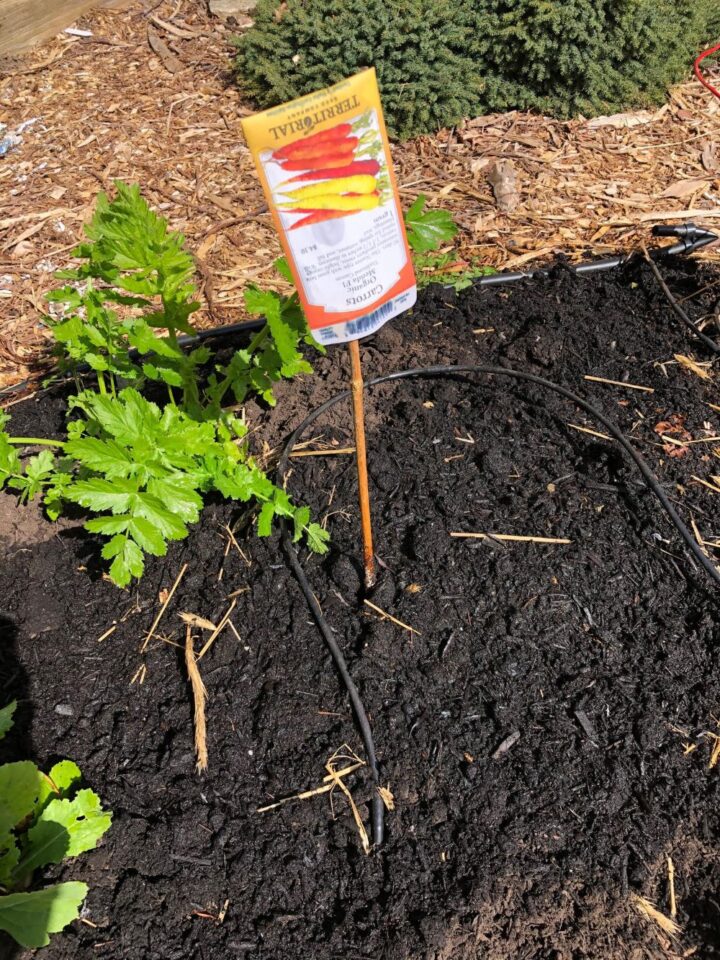
Crops that work well for succession plantings:
Succession Planting: Staggering the timing of seeding a crop by at least a couple of weeks will allow for prolonged harvests of your favorite crops
- Lettuce* (choose different varieties and colors)
- Spinach*
- Bok choi*
- Radish*
- Cilantro* (bolts/goes to seed quickly, so keep seeding through spring)
- Carrots and beets (at least two successions)
*These crops do best in cool weather so they can be grown in spring and again in fall
Transplanting out beginning in April (depending on average last frost date)
Check your average last frost date! These crops can soon be planted from hardened off starts:
- Lettuces, greens (however it’s best to direct seed these)
- Cabbage family: kale, cabbage, broccoli
- Swiss chard
- Onions (starts or sets)
Season Extension & Pest Control: Use row cover fabric (link in resources below) to cover early season plantings and protect from light frosts, pests and critters.
Helpful Resources:
Here’s a list of my favorite local (Pacific Northwest) seed companies. Some links are provided below, however, please see the respective websites for up-to-date info and policies. Sky Nursery in Shoreline also carries many of these brands, plus those of other small local seed companies.
Adaptive Seeds: located in Oregon; All organic, see their seed pledge here; great info on learning to save your own seed
Ed Hume Organics: the lowest price for organic seed, if available; FREE shipping on orders over $50; get a FREE seed packet to grow for their Plant a Row for the Hungry program
Strictly Medicinal Seeds: located in Southern Oregon; all organic; unique and unusual medicinal herbs, plus lots of veggies too; thorough growing information on their site and seed packets; FREE shipping with a $20 purchase (seed packets only)
Territorial Seeds: located in Oregon; great selection of organic options; seed packets and catalog have comprehensive growing info that is excellent for beginning gardeners. The most accurate growing guides for the PNW region
Uprising Seeds: located in Bellingham, Washington; all organic; get free seeds or give free seeds with their Grow It Forward program. FREE planting guide for the PNW
Soil Testing:
Snohomish Conservation District: soil testing info and resources, for more urban gardening resources see Lawns to Lettuce
Compost:
Cedar Grove Organics (also available as bagged and bulk at Sky Nursery, Shoreline)
Row Cover Fabric:
Local nursery or online – can be loosely placed directly over plants and soil, hold down with rocks or soil at edges. Use in spring to add a bit of extra warmth and protect plants from critters and insects. Use again in fall for season extension.
Plant Enough to Share
Remember to always plant enough to share. Plan for some losses (25% or so) due to pests, plant health, etc. and also plan to plant some to share with your neighbors or local food bank. Share the home-grown love!
If you have any questions or would like help planning your garden, contact Marni at GrowingRootsTogether@gmail.com or click here for more information about garden coaching and garden design services.
For Gardeners is a monthly column by and for local gardeners.
Marni Swart is a certified sustainable urban agriculturist, garden coach, certified permaculture designer, nursery woman, and owner of Growing Roots Together. Marni’s passion is teaching people how to sustainably grow more of their own food, herbs, and medicine as a way of building connections with nature and within communities. Learn more at GrowingRootsTogether.com

Marni, Thanks for the great article. I always enjoy your gardening ideas and the seed swap is such an amazing event. I’m looking forward to it!