
Will you chip in to support our nonprofit newsroom with a donation today? Yes, I want to support My Lynnwood News!

Housing, the city’s budget and civic engagement dominated the Lynnwood City Council’s annual summit meeting last week as elected officials and city staff discussed how best to tackle issues facing Lynnwood.
At the start of each calendar year, the council holds an informal work session to discuss city issues the council does not have time to address during regular work sessions. At the four-hour Feb. 8 meeting, city staff briefed the council on how they are working to find solutions for issues like housing and homelessness, as well as other areas like the city budget.
Council President Christine Frizzell kicked off the discussion by emphasizing the teamwork and togetherness necessary as the city faces future growth with the arrival of Sound Transit’s light rail in 2024. During her remarks, Frizzell compared city leaders to trees Washington state is known for and said that the city’s strength lies in its diverse, unified leadership.
“Most of the time here in Washington, we see trees in groups and we see variety and that’s what I see as I look around this table here,” she said. “We need each other…in order to become more than a village, but really a team.”
Housing
The first agenda item brought to the table was housing, which has been the topic of conversation and debate as the council has been working to find a solution to rising costs and ways to bring more affordable housing to the city.
“It’s a national issue, it’s a regional issue and it is of course a very important issue for Lynnwood,” said Economic Director David Kleitsch.
During the discussion, Kleitsch was joined by city staff members who presented the city’s housing action plan, which the city will use to develop clear, actionable strategies that meet Lynnwood’s current and future housing needs. State law requires that the plan identify strategies to encourage construction of a greater variety of affordable- and market-rate housing at accessible prices across all income levels.
According to city staff, 37% of Lynnwood households spend more than 30% of their monthly income on housing. Additionally, more than half (51%) of renters — and 26% of homeowners — in the city are considered to be cost burdened, meaning they spend more than 30% of their gross monthly income on housing. Comparatively, 47% of Snohomish County renters are considered to be cost burdened with 26% of the county’s homeowners being cost burdened.
Last year the Washington State Legislature passed HB 1923, which provides funding for cities to adopt action plans to address housing by increasing residential building capacity. Under the measure, the city received a $100,000 grant from the U.S. Department of Commerce to establish the plan. An alternative to the measure was to adopt two of the 12 actions, including increasing density near train stations and decreasing city parking requirements, a subarea plan, and a planned action ordinance, all of which Lynnwood has already done, said senior planner Ashley Winchell.
“We’re doing a lot already,” she said. “So what we hope to do with the housing action plan is to check what we’re doing, see if we can improve what we’re doing and expand what we’re doing.”
Next, Winchell reviewed early-action items included in the Snohomish County Housing AffordabilityPlan.
According to Winchell, Lynnwood is one of three cities that have an interlocal agreement with the Housing Authority of Snohomish County (HASCO), which allows HASCO to purchase properties in the city without approval from the Lynnwood City Council. With fewer hurdles to jump over, Winchell said HASCO is able to bring affordable housing to the city sooner.
“That’s huge for HASCO because it means when they see properties they want, they can act on it,” she said.
Next, Mayor Nicola Smith briefed the council on the Snohomish County Housing Affordability Regional Taskforce (HART) report, which was publicly released at a Feb. 5 press conference. Smith co-chaired the taskforce with Snohomish County Executive Dave Somers.
Local elected leaders have been feeling the pressure to be a regional model for housing solutions. According to Smith, other municipalities are looking to Lynnwood for guidance, because what affects Lynnwood will also affect surrounding cities.
“They are watching us,” she said.
Established last year, the task force included 15 local elected officials and more than 40 community members and experts. The HART report establishes a five-year action plan, including early-action items, that identifies priorities for county and city governments to meet the affordable housing needs of all Snohomish County residents.
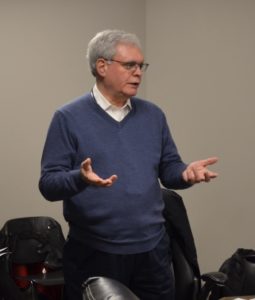
According to the report, Snohomish County experienced a 12.4% population increase between 2010-17 and will see a 26% increase from 2020-40. During that 2010-17 time frame, median local household income has risen 18%, while the cost of housing is up 50%. Additionally, Smith said the area has seen a 50-68% decline in low-rent housing units, and the median value of land has increased 50-99% in the area, which has led to a loss of the middle market.
In Snohomish County, the fair-market rent for a two-bedroom apartment is priced at $1,899 per month. For renters to afford that level of housing — and utilities — without paying more than 30% of their monthly income, they would have to bring in $6,330 monthly, which — assuming the renter is working a full-time hourly job — translates to $36.52 an hour. Smith pointed out that no one type of person struggles to afford housing, and that it affects those across all employment fields, including teachers, firefighters and minimum-wage workers.
“We need to get beyond this idea that somehow this is all about ‘other’ people,” Smith said.
Though the city has no established housing policy in place, the council has taken steps to implement policies that low-income tenants could benefit from. In October, the council voted to approve an ad hoc task group proposed by Councilmember George Hurst to draft an ordinance aimed at helping the city work with landlords who are displacing low-income tenants. The motion was in response to a September 2021 move-out date for Whispering Pines residents so the building can undergo redevelopment.
The task group members have since decided that they will become a housing policy committee tasked with looking at all factors related to the city’s housing issue. Frizzell said she felt the task group was unbalanced and the members did not represent those who would benefit most from affordable housing.
“What I don’t want to have happen is to have this be an unbalanced committee and we get all the way to the 5-yard line and all of a sudden we have issues we haven’t thought of because we didn’t look around the table and figure out who wasn’t there,” she said.
Councilmember Ruth Ross agreed that the task group needed to have more representation of people who would benefit from the task force’s work. Additionally, she stressed that any decisions or policies made by the council should not affect any financial benefits residents receive from the government.
“Anything the city does cannot impact the benefits these folks already have,” she said. “We have to make sure we’re talking to the right people about that because they will not know until they get hit with sanctions of some kind.”
Though Whispering Pines residents are facing an eviction date soon, Council Vice President Shannon Sessions said the city should not spend too much time focusing on one group of people when developing a housing plan. Since HASCO has given Whispering Pines residents three years notice as well as other resources to assist them with relocating, Sessions pointed out there are other community members in greater need.
“Whispering Pines folks are in a risky housing situation, but they are in so much of a better spot than so many other people in our community,” she said. “The attention that this council has given just this one community, I think it’s been a lot and I don’t want this task force to center just on that.”
With the housing action plan established, the city’s next step includes hiring consultants to collect more data and public feedback to decide how to move forward with a housing policy, said senior planner Kristen Holdsworth.
In addition to the early action established by HART, there are 37 other efforts included in the five-year plan that the city will begin to review and decide how to implement. Holdsworth said a draft housing action plan will be released in October. The city has until 2021 to adopt a plan so that it can receive state funding to implement it.
Budget
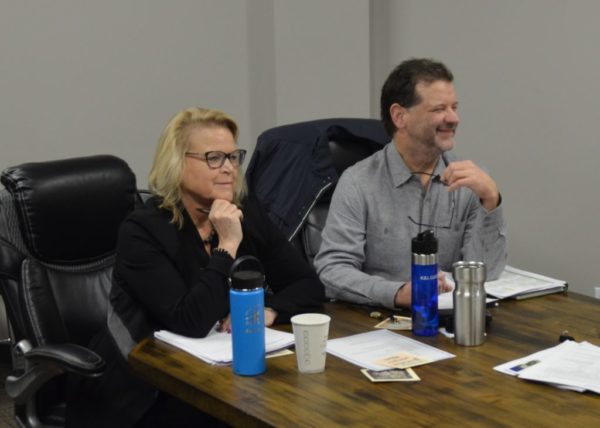
Following housing, the council discussed the city’s 2021-22 biennium budget schedule and how city staff will be changing the way the budget is drafted this time around.
Finance Director Sonja Springer began the discussion by highlighting key dates regarding the city budget, with a preliminary draft scheduled to be presented to the council for review Sept. 14. Following council review, a tentative first public hearing date is set for Sept. 28 before it goes back to the council on Oct. 28. A second public hearing will be Nov. 9, and city staff plans to continue to review the budget as needed
In the past, the city has used incremental budgeting, which included increasing city budgets by 2-3% from the previous year. According to Senior Manager of Strategic Planning Corbitt Loch, this budget style perpetuates the past rather than considering future goals and achievements.
This year, Loch said city staff intends to be more forward thinking by developing a “budget with outcomes.”
“(City staff) decide what are our highest priorities, what are our objectives and strategies to achieve them,” he said. “Then our departments build their budgets to achieve their outcomes.”
Loch said the next budget proposal will focus more attention on the city departments’ performance measures, which he said would better enable the community to grow.
“Our past budgets have had performance measures, but they’re not as finely tuned as I think they can be,” he said.
During the discussion, councilmembers were asked if they had any suggestions or priorities for the next budget. Councilmember Ross suggested a city internship program. She proposed a two-year program where an intern could work on forming a youth council and produce a draft ordinance for the council’s review.
Community engagement
The final summit agenda item focused on how the council can engage with the community.
Kicking off the discussion, Councilmember Julieta Altamirano-Crosby said engagement is a two-way street and that if the council wants to keep the community informed, it should find ways to reach out to residents. She then suggested that the council collaborate with other community stakeholders like the Edmonds School District and the Lynnwood Library to perform outreach to the city’s youth.
“Who are the best teachers for us? Our children,” she said.
By engaging with students, Altamirano-Crosby said the council would be able to spread information to parents. She also suggested that the council reach out to local parent groups in the district and bring them into council discussions. According to Altamirano-Crosby, many people do not understand what the council does.
Through engagement, she said the council would be able to build more trust with the community, which she said the council needs.
“Without trust, you don’t have anything,” she said.
Loren Simmonds, a former city councilmember and current Lynnwood resident who attended the meeting, pointed out that the city has already begun outreach by holding roundtable discussions with community stakeholders about housing and with local business owners. Simmonds suggested that the council invite other stakeholders like parent groups to engage with the council in the same setting.
Additionally, improved communication with the community could lead to fewer instances in which the council is caught off guard by unexpected events, said Councilmember Ruth Ross. Also, she said it would give the council the chance to get in front of possible issues facing the city and its image.
As an example, Ross said that the city was very fortunate that they got away relatively unscathed when Netflix released Unbelievable, a miniseries inspired by the 2016 Pulitzer Prize-winning ProPublica article “An Unbelievable Story of Rape.” The story was about an 18-year-old Lynnwood woman who was raped at knifepoint in her apartment and later accused of lying about the assault and charged with false reporting.
“We were lucky,” Ross said. “And whether we like it or not, that is international attention.”
After Netflix released the series — which resurfaced in headlines in January when it was nominated for four Golden Globe Awards — Ross said the city had an opportunity to have a conversation about a big issue. She said the city was too concerned about negative publicity surrounding the Lynnwood Police Department’s involvement in the incident
“We missed the opportunity to talk about sexual assault and what has happened with Lynnwood since this took place,” she said. “Why are we not talking about that?”
Though the police department issued a statement following the release of the series, Ross said it was too late and something should have been said sooner.
Also during the discussion, Councilmember George Hurst suggested that the council allow for more time between public hearings and council action before adopting city ordinances. Typically, when a public hearing regarding a proposed ordinance is held, the council votes on the ordinance after the hearing. Hurst said the council should give community members more time before taking action.
“It’s almost like we disrespect the people who come to talk to us, have a different opinion and then we vote on it,” he said.
Councilmember Jim Smith agreed that the public should have more opportunities to provide the council feedback on decisions being made for the city. If the council allowed for a two-week period between public hearings and a council vote, it would give the residents time to speak directly with councilmembers and ensure that the decisions being made are in the city’s best interests, Smith said.
During her closing remarks, Frizzell praised the council’s collaborative efforts during the discussion and their work serving Lynnwood residents.
“I think we do a really good job within this group of being a lot of things,” she said.
–Story and photos by Cody Sexton


Real first and last names — as well as city of residence — are required for all commenters.
This is so we can verify your identity before approving your comment.
By commenting here you agree to abide by our Code of Conduct. Please read our code at the bottom of this page before commenting.