
Will you chip in to support our nonprofit newsroom with a donation today? Yes, I want to support My Lynnwood News!
The Lynnwood City Council was interrupted three times during its work session on Oct. 2. The first incident was a power outage caused by a collision related to a police incident. Shortly after the power was restored and the live-stream restarted, Council President Shannon Sessions called a point of order to inform her fellow councilmembers and speakers that the man fleeing from police was still in the area, so Lynnwood City Hall was locked down to prevent any entry by the then-fugitive at large. Later in the evening, a third interruption occurred when the building’s power generator switched on.
The council continued its regular work throughout the hectic series of events.

Public Works Director Bill Franz and City Engineer David Mach presented to the council about seven transportation projects at varying levels of completion.
1. The city has partnered with Sound Transit to pave a section of road on 200th Street Southwest. Sound Transit already intended to pave 70% of the area, but the remaining portion is already overdue for paving, so Lynnwood will be providing Sound Transit $300,000 to have their contractors include the other 30%. An agreement will be brought to the council at a later date.
2. Two intersections on Alderwood Mall Parkway are situated very close to each other, resulting in high levels of traffic congestion, which residents and the nearby Costco have asked the city to address. Costco hired a traffic consultant to analyze the traffic at 30th Place West and 33rd Avenue West. The consultant generated three alternatives for easing traffic flow in the area.
Mach stated that during a well-attended public hearing on the “Costco Traffic” problem, the public brought several ideas for consideration. These will be reviewed and the department will continue to work on the issue until staff can make a recommendation to the council.
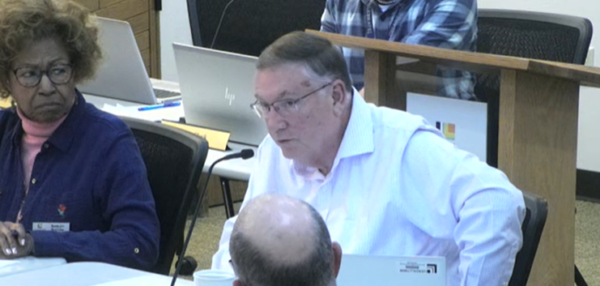
Councilmember George Hurst asked if the area had any safety concerns, and Mach confirmed it did not. With that information, Hurst asked about how the renovation costs would be distributed given that the roadway was safe. Mach replied that ideally, Costco would pay for all of it but no negotiations or offers have been made yet.
3. Mach reported that the Poplar Bridge project is moving quickly. It includes the construction of an arterial bridge to connect Poplar Way/196th Street Southwest and 33rd Avenue West. The City Center Access Study identified this bridge as an alternative to the 196th Street crossing at I-5. It is the most significant solution for congestion relief in the City Center along 196th Street Southwest and around Alderwood Mall. The project has received over $46 million in funding from the state and federal governments, but estimates suggest that the city still needs to collect $3 million to $5 million. Lynnwood planners will have time to consider funding options as construction on the bridge is estimated to last two years, from 2025-2026.
4. The council recently approved an interlocal agreement with the Edmonds School District to share in the cost of developing a gravel section of 204th Street Southwest just north of College Place Elementary School. Besides paving the area, the project’s main goal is to increase public safety. At a February work session, the council was surprised that costs had increased to an estimated $2.7 million-$3.2 million for what was considered a small portion of road. Mach said the plans are about 90% complete for the area and that construction is expected to begin before summer 2024 so the majority of construction can be done during summer break. Staff estimated construction will conclude in fall 2024.

5. In 2022, the council allocated $2.5 million of American Rescue Plan Act funds to pave various Lynnwood streets. With the exception of a few minor items such as sidewalk repairs and pavement markings, most of those paving projects have been completed.
6. Waterline piping must be replaced in certain areas due to the age and wear of steel piping in some areas. This also requires contractors to “tear up the roads” to access the piping and repave the areas when the repairs are concluded. These repairs, mostly located in residential areas, are planned to occur during summer 2024.
7. Two intersections – 196th/50th and Highway 99/52nd– have been the cause of safety concerns. By eliminating left turns at the intersections, planners hope to lower safety risks associated with the areas. Public works staff sent out postcards to nearby residences to solicit public feedback on the matter and received only positive feedback and endorsements for eliminating those left turns. Improvements and pavement repairs will begin within a matter of days.
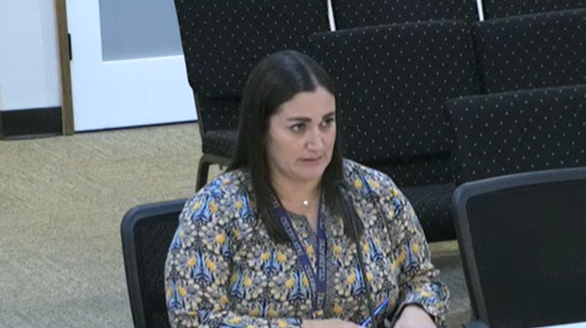
In other business, the council also discussed legislative priorities. At the request of councilmembers in 2022, staff were asked to inform the council when they began planning for Lynnwood’s 2024 Legislative Priorities.
Councilmembers said they were unclear as to the exact function of the legislative priorities list. City Assistant City Administrator Julie Moore described the list as a document that state and federal legislators consider when evaluating what efforts they will pursue when advocating for new laws and funding. The priorities will also be referenced when the city requests project funding such as grants. Sessions likened the priorities to a wishlist, saying that they were “reminders and asks for the city from the state.”
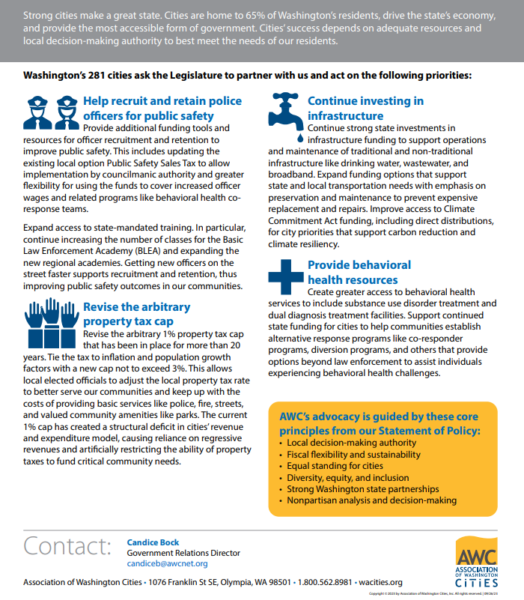
The list of 2024 priorities has not yet been drafted, so copies of the Association of Washington Cities (AWC) priorities were dispersed to the council for consideration. AWC represents its member cities before the state Legislature and executive branch and with regulatory agencies. As a result, Moore said that generally a statement of support for the AWC was added to the city’s legislative priorities. She encouraged councilmembers to consider Lynnwood’s main priorities, whether it was emphasizing a specific AWC item or other ideas that the AWC had not included in its list.
Councilmember Patrick Decker questioned an AWC priority entitled “Revise the arbitrary property tax cap,” which would revise the current 1% property tax to adjust for inflation and population growth with a new cap not to exceed 3%. Decker said he would be opposed to such an option as property owners were already paying high taxes.
Decker questioned the “regressive revenue” in the item, saying the term was “loaded” and could mean many different things. The AWC item reads “The current 1% cap has created a structural deficit in cities’ revenue and expenditure model, causing reliance on regressive revenues and artificially restricting the ability of property taxes to fund critical community needs.”
A regressive tax is a tax that is felt disproportionately by those with lower incomes, as the tax constitutes a larger portion of their earnings than those who make more money. An example of a regressive tax is Social Security tax; employees and their employers pay 6.2% percent of a wage up to the taxable maximum of $160,200. Past that amount, no Social Security taxes are taken from the wage, so an individual making $160,200 per year will pay the same dollar amount of Social Security tax as an individual making $500,000 per year. Other examples include sales tax and excise tax.
“We’ve been talking a lot about affordable housing and how little the city council can do in this space. We have very few levers and I’ll be very cautious about signing onto something where the city council has a responsibility to create affordable housing. I don’t see how we can do that, I don’t see that’s in our province or our ability to do so.” Decker said.
Council Vice President Julieta Altamirano-Crosby suggested that the council collaborates more closely with other members of the AWC to influence regional change more effectively.
Moore said that items related to infrastructure were likely to stay on the agenda as the city has many ongoing projects.
During a continuing conversation regarding attorney’s fees, the council heard ideas to possibly lower the quantity of invoices. At the current rate that the city is requesting work from City Attorney Lisa Marshall, Lynnwood is expected to use over 60% of its biennial budget during the first year, leaving less than 40% for the second budget year.
Sessions reminded the council that Marshall had office hours prior to business meetings that they could freely utilize instead of tasking her with more work. She added that councilmembers could share information with each other to ensure they no longer make several requests for the same information, perhaps using a folder of sorts. Finally, Sessions urged councilmembers to not use the city attorney as their own legal consultant.
Councilmember Jim Smith said that although he appreciated Sessions’ warning, he wished to retain individual, private sessions for individual councilmembers and said that a sharing folder would be contrary to that. He added that since the council has primary authority over the budget, councilmembers could opt to increase their legal spending budget.
No decisions were made to change or modify council procedures related to using city attorney services, but some items required further research and consultation with Marshall. Sessions concluded the conversation by saying that her intent inputting the item on the agenda was to remind the council of the issue, which she felt was accomplished during the discussion.
–By Jasmine Contreras-Lewis


Sounds like y’all are doing good things..
I suggest to look for ways to create safe sidewalks especially where there are schools. Not to mention ADA requirements for access.
Then please, please, repair 172nd between 36th and 44th, Since the round-a-bout, there has been an increase in traffic through this residential corridor. (Like the increase which occurred on 179th St SW). Existing potholes, narrow streets and absence of sidewalks makes this not only an eye sore, but hazardous.
The council’s discussion about the Alderwood Mall Parkway near COSTCO is a classic example of un-intended consequence of how road improvements can change traffic patterns. When the Round-a-bout went in, and 36th was completed, we found heavier traffic at both of these areas.