
Will you chip in to support our nonprofit newsroom with a donation today? Yes, I want to support My Lynnwood News!
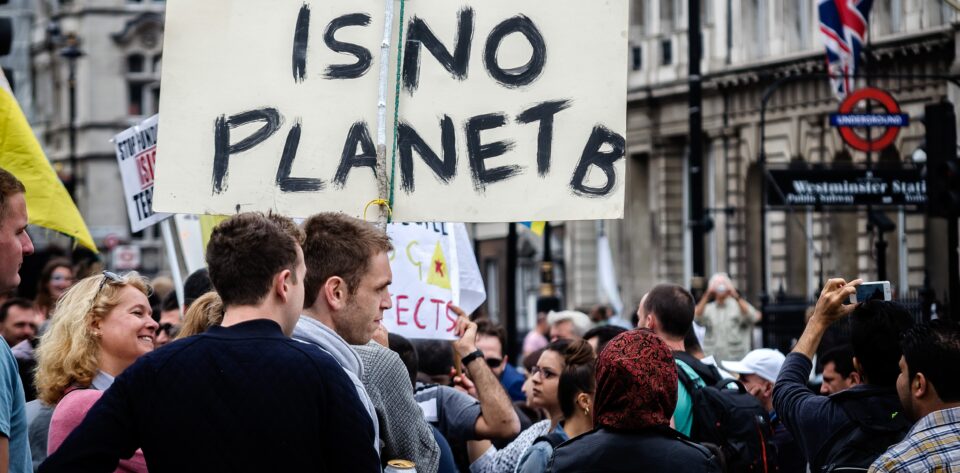
I was asked for a short presentation for folks who have not yet learned about global warming. I thought it might help to share the presentation here to get us all on the same page.
For the last 125 years, people have been digging up, pumping up and burning fossil fuels. Fossil fuels are coal, petroleum, natural gas, propane and fuels we make from them, like gasoline and diesel. Tax records have documented how much was burned. Since 1900, we have burned about 315 billion tons of coal, 1.7 trillion barrels of oil and 178 trillion cubic yards of natural gas.
When you burn fossil fuels, they add carbon dioxide to the air. In 1900, there were 2.3 trillion tons of carbon dioxide in the air, which freezes into dry ice. If you froze all the carbon dioxide in the air in 1900, it would have made 2.3 trillion tons of dry ice.
We have burned enough fossil fuels to add another 1.8 trillion tons to the 2.3 trillion that’s already in the air since 1900. We added almost as much as was there already.
About 800 billion tons of the carbon dioxide we added to the air has dissolved into our oceans. Carbon dioxide makes water acidic, and we’ve added so much of that to our oceans that ocean acidity has gotten higher than anyone would allow in a home aquarium.
The increased acidity has harmed fish and shellfish throughout the oceans. For example, in 2006, the increased acidity killed 70% of hatchery oysters in our local Pacific Northwest waters.
The remaining one trillion tons of added carbon dioxide has stayed in the air. From 800,000 years ago up to 125 years ago, carbon dioxide in the air stayed between 1.3 trillion tons and 2.3 trillion tons. Since 1900, our fossil fuel burning has increased carbon dioxide to 3.3 trillion tons, half again higher than it was in 1900 and half again higher than it has ever been over the last 800,000 years.
Previously, when carbon dioxide levels were high, it took about 40,000 years for Earth to pull them down again. It will probably be more than 40,000 years before Earth pulls out what we added by burning fossil fuels.
Carbon dioxide is a gas, like oxygen. Humans cannot see or smell carbon dioxide. Animals breathe oxygen in and breathe out carbon dioxide. Plants breathe carbon dioxide in and breathe out oxygen. Without ventilation, a greenhouse will fill up with oxygen and carbon dioxide levels will get too low for healthy plants. To avoid that, greenhouse gardeners use carbon dioxide monitors, which are not complicated to use. You can buy one for less than $15.
Here’s how they work: Carbon dioxide absorbs heat and then radiates it back out later. Carbon dioxide monitors use heat lamps to shine infrared heat through air and measure how much gets through. When more heat gets trapped, that tells us there’s more carbon dioxide.
In the air, infrared heat radiates away from Earth and would head to outer space, letting Earth keep cool. When there is more carbon dioxide, more infrared heat gets caught and radiated back, and Earth’s temperatures rise.
Temperatures on Earth have risen an average of 2.3 °F since 1900.
Higher temperatures evaporate more water. Every 1-degree Fahrenheit increase in temperature raises how much water evaporates by about 4%. In places where farmers use irrigation, they have to increase how much they water their fields or they risk drier soils and lower yields. A 2.3 °F increase in temperatures leads farmers to irrigate with 9% more water to combat evaporation.
Increased irrigation lowers our reservoirs and depletes our rivers. For example, two massive reservoirs on the Colorado River that water much of the agricultural lands of California (Lake Mead and Lake Powell) have become so low, they are about halfway to being too low to provide any water at all.
In other places, irrigation is not available to compensate for the 9% increase in evaporation. Many of those places have dried out, killing plants and creating tinder that can ignite into wildfires. The fire that burned down Lahaina, Hawaii, in 2023 started in grass fields that had been completely dried out by higher temperatures. Similarly, the fires in Los Angeles in 2025 started in shrubs that had been dried out by greater evaporation. In regions that do not have access to irrigation and that were already close to too dry to support agriculture, the 9% increase in evaporation has ruined farmers’ chances of growing enough food to eat.
Droughts
Droughts happened before global warming. With higher temperatures, droughts get hotter and last longer. A light rain that might have saved crops in the past now evaporates away 9% faster. Droughts are now almost twice as common as they were before 1900. In California, Arizona, Nevada and parts of other states, a drought has now lasted 32 years. There is some indication that, rather than being a temporary drought, the new temperatures and dryness will become permanent in those locations.
In addition to more evaporation, farmers and the rest of us have to cope with rising temperatures that are making the U.S. climate more like Mexico’s. The damage to agriculture in Mexico drives farming families north hoping for new opportunities. It also affects insects and infectious diseases and changes the life cycles of insects, sometimes with devastating results.
In the U.S. and Canada, pine trees have been devastated by pine beetles that are migrating northward. The warmer temperatures now allow pine beetles to lay and hatch eggs twice each year rather than only once. There are now twice as many pine beetles each year and twice as much pine bark eaten. In 2023, pine beetles damaged 25,600 acres of Douglas fir trees in Washington state. Some 3.4 million acres of Colorado pine forests have lost trees.
The hantavirus is an example of infections moving northward. Hotter climates drive infected rats north, infecting people in places that were previously too cold for the rats.
Flooding
More evaporation increases how much water is lifted into the air. When the water comes back out as rain, there is a lot more of it. Heavy rains are now much heavier, and they overwhelm valleys, dams, cities and towns.
Reports of record rainfall appear all the time now. One inch of rain in a day is considered “heavy rain” in Seattle. Last month, 4 inches fell on Morocco in a single day. In 2024, parts of Valencia in Spain were submerged by 25 inches of rain that fell in eight hours.
In July 2025, 20 inches of rain fell on parts of Texas over three days, creating flooding that swept down the Guadalupe River, killing 136 people, including 27 campers at a religious girls’ camp. This flooding, which has not been seen before, occurs because the hotter air carries more water.
One of the worst aspects of flooding is that flood waters carry infectious diseases like cholera and other dangerous bacterial infections.
Trade winds and the polar vortex
The global 2.3 °F increase in temperature is an average across every location worldwide. Different locations are heating up at different speeds. For example, since the start of the 1900s to the last 10 years, the average temperature in Seattle has risen 2.4°. At the North Pole, temperatures have been rising faster. In the Arctic, the average temperature in the last 10 years was 5.2° higher than in 1900. Because the Arctic’s warming is faster, Arctic temperatures are getting closer to the temperatures farther south.
Our weather patterns depend on a large difference in temperatures between the tropics and the Arctic. That difference strengthens trade winds that flow over North America and Europe and strengthens the polar vortex over the Arctic. The polar vortex has kept cold Arctic air away from lands farther south.
As the Arctic temperatures rise faster than those in the the tropics, the difference in temperatures gets smaller. Our trade winds slow down and the polar vortex starts wobbling and falling apart. The air over the North Pole is warmer than it was, but it’s still very cold.
Unfortunately, now it does not stay over the North Pole the way it used to. Instead, the vortex gets floppy and spreads down toward the equator, bringing Arctic cold to southern regions. Last February, a polar vortex brought record freezing temperatures to much of the U.S. Temperatures got down to 25 °F in Orlando, Florida, and 22 °F in Gainesville.
The warmer Arctic temperatures also slow the trade winds, which causes their dense air to wobble north and south and is more likely to leave behind a blob of dense air that does not go anywhere. The stationary dense air becomes a cap over a location called a “heat dome.” Heat domes prevent winds and breezes. When the air in a location gets trapped, it cools down a little bit each night but starts each new day warmer than the last. The result can be a heat wave like the one that overheated the Northwest in 2021, raising temperatures in Seattle to 107°. The higher temperatures over 41 days in 2021 killed, directly and indirectly, 1,232 people in Washington state.
Global warming makes heat waves happen three times as often as in the 1960s. Last year, a heat wave in June set new records for any day in June throughout the Midwest. Other heat waves struck Europe, killing more than 14,000 people. This year, a heat wave raised temperatures in Australia over 120 °F in January, sparking almost 200 wildfires. March will see heat waves in California with temperatures 30° over normal.
Forest fires
Heat waves and droughts create wildfires. For example, the Northwest heat wave of 2021 was hottest at Lytton, British Columbia, 150 miles north of Bellingham. Temperatures in Lytton got over 100 °F on June 25 and got hotter every day for the next four days. On June 29, Lytton reached 121 °F. The next day, Lytton burned down.
Until 2003, Canada’s forests consumed huge amounts of carbon dioxide. Now they are burning up, and almost all of Canada’s carbon dioxide comes from burning forests.
Smoke
Forest fires create smoke that is dangerous to the health of people and other animals hundreds of miles away. In September 2022, Seattle had the worst air quality of any city in the world as wildfire smoke poured into our region after there had been no significant rain since June 9 due to climate change lengthening our summer dry season. For eight days in 2023, Canadian wildfires cloaked New York City in smoke that was flagged as “unhealthy for all groups.”
Hurricanes
Slower trade winds increase the damage of hurricanes. The winds of a hurricane spin around a center, called the “eye of the hurricane.” The eye itself moves from place to place. If the eye is moving briskly, each location gets hurricane winds and rain for only a short time. When the eye slows down, the hurricane can sit over a location for a longer time. As global warming slows the trade winds, hurricane eyes travel more slowly, dropping more rain and battering locations with more wind.
The slower hurricane eye movement is happening at the same time that our oceans are heating up. Hotter oceans provide more energy to hurricanes, making hurricane wind speeds faster. We now have faster winds spinning around locations that are battered for more hours and more days.
Sea level rise
As the Arctic and Antarctic have more and more days with temperatures above freezing, their ice caps are melting. Glaciers are melting away everywhere around the globe. All that water gets into the oceans, and sea levels are rising.
A second issue about oceans is that water expands as it gets hotter. Not so much that you would notice it in your kitchen, but when you heat an entire ocean, the water expands enough to raise sea levels. The expanding ocean has combined with the melting glaciers to raise sea levels about 10 inches since 1880.
Rising sea levels are swamping cities during some high tides. Some Miami streets and sidewalks are now regularly underwater at king tides, as are streets in Boston, Massachusetts; Annapolis, Maryland; Norwalk, Connecticut; New York City; and San Francisco.
What are we doing about global warming?
Global warming is caused by burning fossil fuels, and the solution to global warming is straightforward: Stop burning fossil fuels.
We are replacing our fossil fuel power plants with wind and solar. Every power plant has a limited lifetime before it must be replaced. Wind and solar electricity generation does not burn any fossil fuels, and they are cheaper than fossil fuels. As power plants are replaced, we are switching to solar and wind.
We are switching from gasoline cars and trucks to electric vehicles. Gasoline-powered vehicles also wear out and have to be replaced. Replacing gasoline with electricity stops gasoline burning and saves money.
We are switching to heat pumps. Heat pumps provide air conditioning as well as heating. Because heat waves are becoming more common, everyone wants air conditioning. Heat pumps do not burn natural gas. In Europe, switching away from natural gas is recognized as a national security strategy. Ninety percent of new home heating installations in Snohomish County are now heat pumps.
Industries are also switching from fossil fuels to electricity. Steel manufacturing without coal is taking off. We know how to make cement without emissions, and zero-emissions cement manufacturing is getting launched.
We humans are switching away from fossil fuels, but we have a long way to go. The consequences we have faced so far are bad. Until we stop burning fossil fuels, the consequences will get worse. The big question is how fast we will stop burning fossil fuels. How quickly we stop determines how bad global warming will get.
Many thanks to Anthony Stawa for guidance on this column.
Nick Maxwell is a certified climate action planner at Climate Protection NW, teaches about climate protection at the Creative Retirement Institute and serves on the Edmonds Planning Board.


Real first and last names — as well as city of residence — are required for all commenters.
This is so we can verify your identity before approving your comment.
By commenting here you agree to abide by our Code of Conduct. Please read our code at the bottom of this page before commenting.