
Will you chip in to support our nonprofit newsroom with a donation today? Yes, I want to support My Lynnwood News!
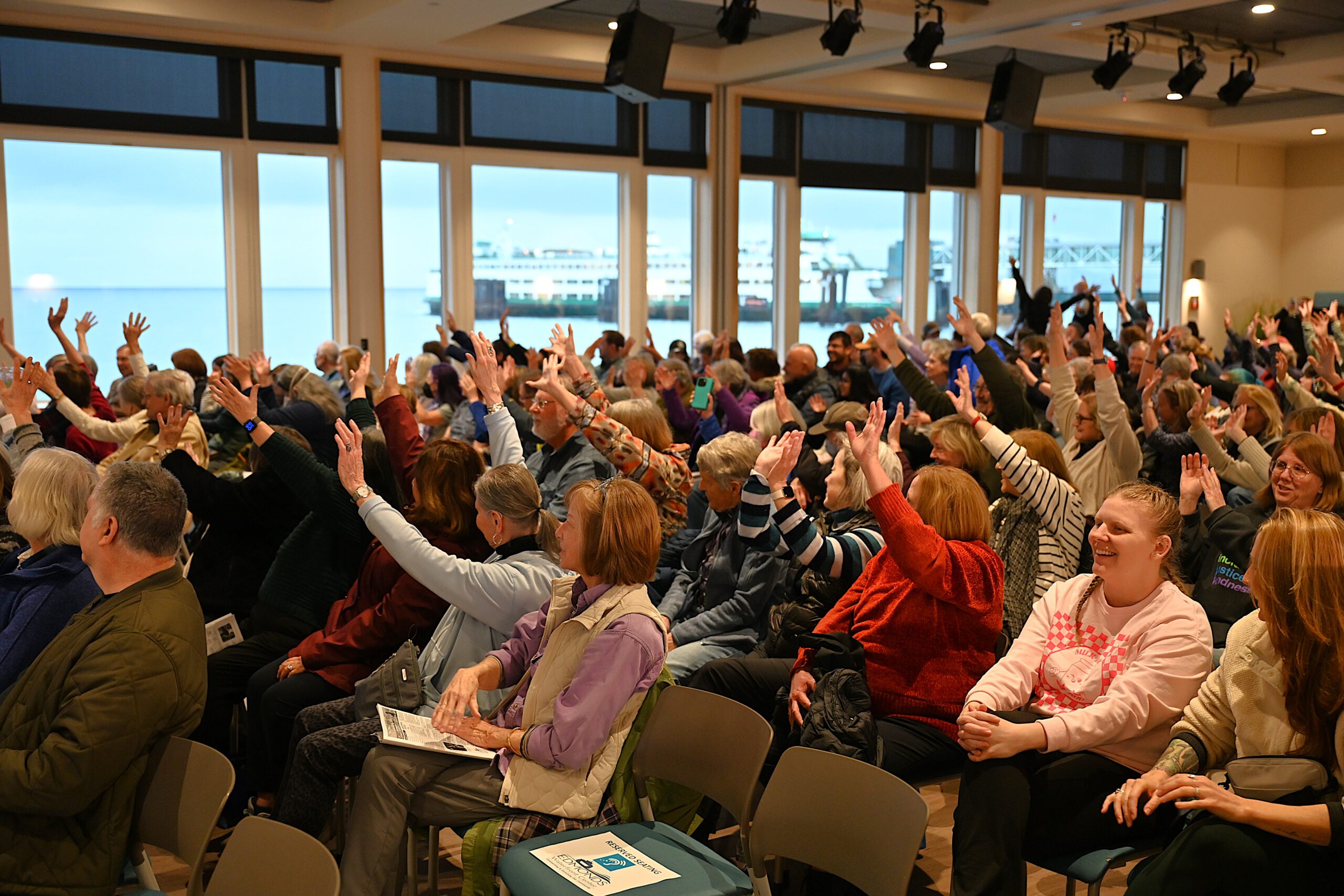
With the Salish Sea visible to the west, more than 200 people packed the Edmonds Waterfront Center auditorium March 12 to learn about how a well-trained dog nose and killer whale feces are unlocking crucial data about the health of Southern Resident killer whales (SRKW).
Deborah Giles, a killer whale scientist with the nonprofit SeaDoc Society and a leading expert on the health and conservation of SRKW, was the featured speaker at “Tracking the Health of Endangered Orcas: Science, Scat and the Future of our Southern Residents.” The presentation was part of the Environmental Speaker Series curated by “Ocean” Annie Crawley, an award-winning filmmaker, underwater photographer, author and educator focused on ocean advocacy.
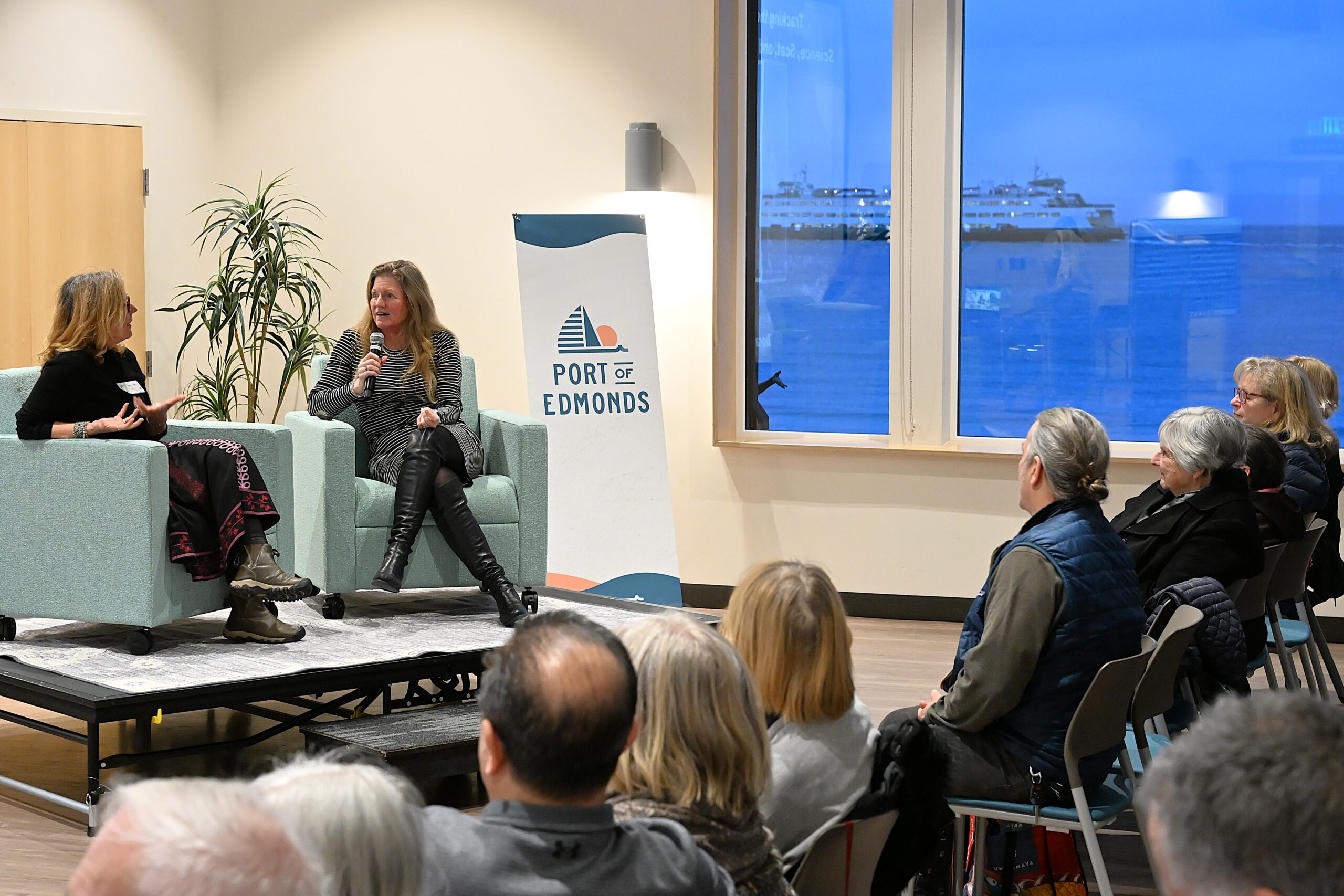
Giles, who is also a resident scientist and lecturer at the University of Washington’s Friday Harbor Laboratories, detailed how she and her colleagues are obtaining health data about SRKW, whose total population is currently 74.
Despite being one of the world’s most studied animal populations, killer whales are currently endangered in both the U.S. and Canada. A shrinking supply of Chinook salmon, its primary food source, is a major factor, along with the auditory and physical disturbance caused by sea vessels, and increasing levels of human-made contaminants in their blubber.
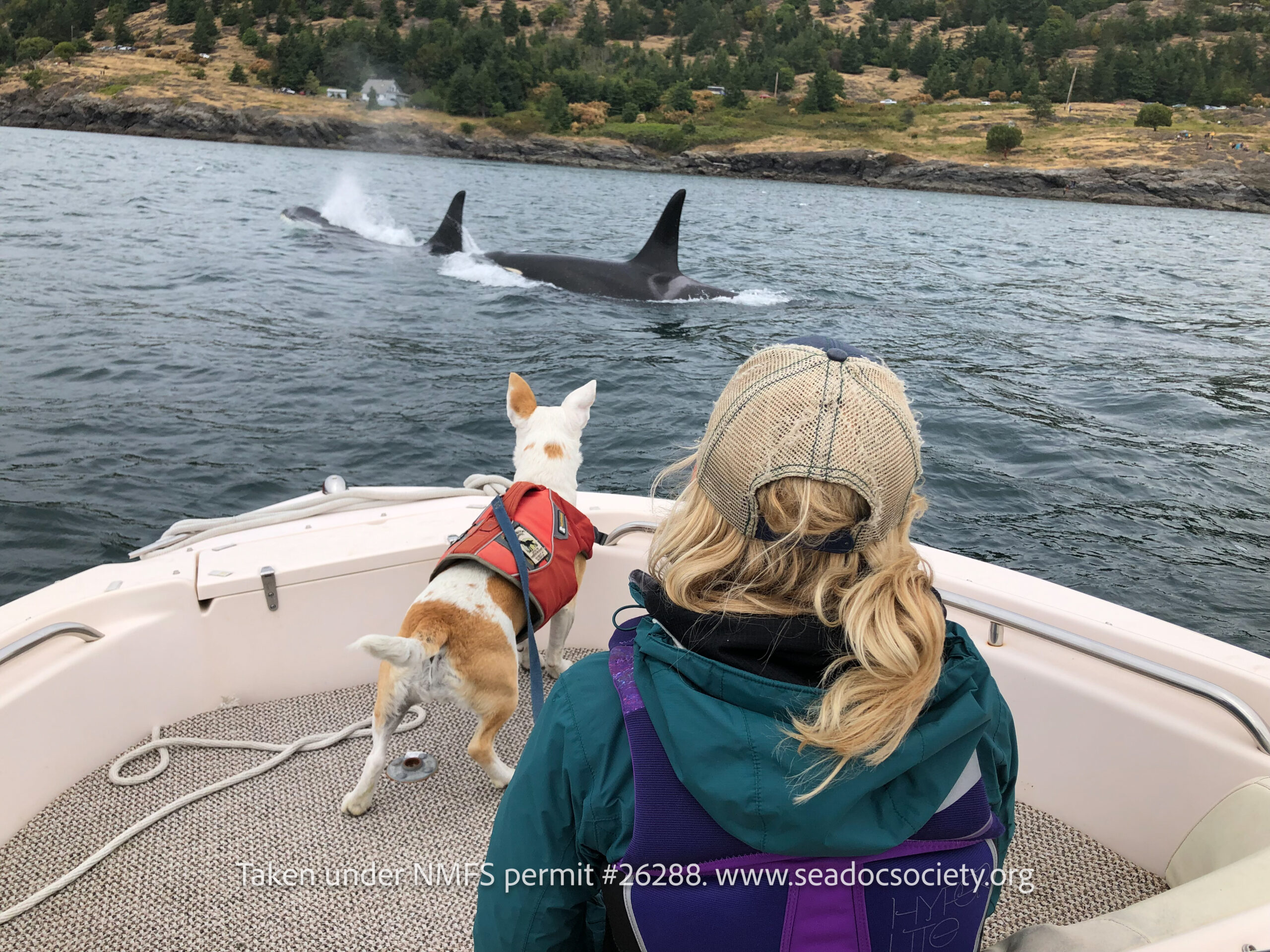
From 2009 to 2021, Giles served as program lead and vessel captain for the University of Washington’s Whale Scat Program, which pioneered the use of a scat-detection dog to locate floating killer whale feces and assess whale health through hormone and physiological analysis.
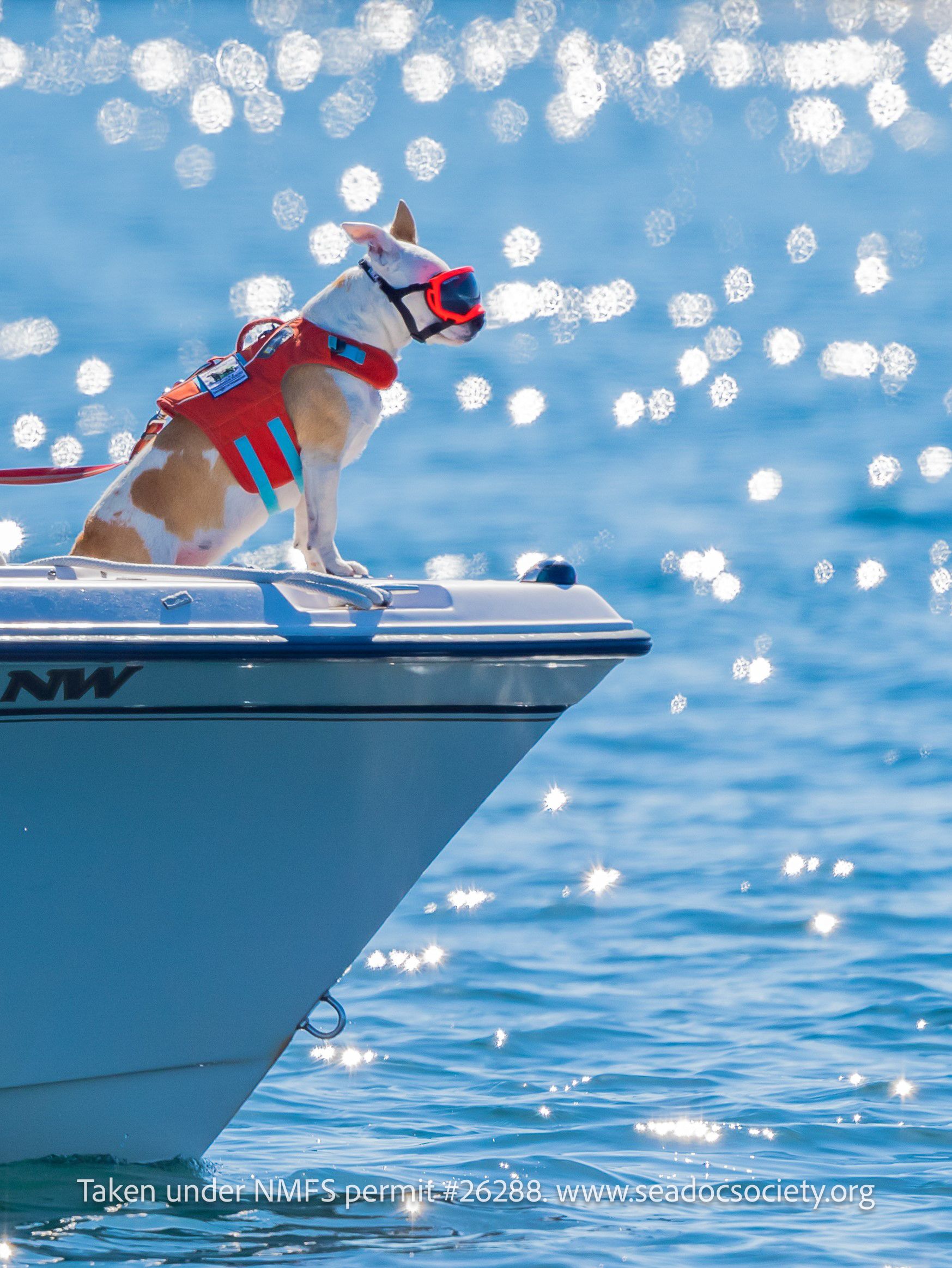
Giles’ canine research assistant, Eba “the whale dog,” was quietly sitting in the front row with Giles’ husband. Eba is a conservation dog who was professionally trained at UW to detect the scent of killer whale scat; since 2019 she has been an invaluable member of the whale scat detection team.
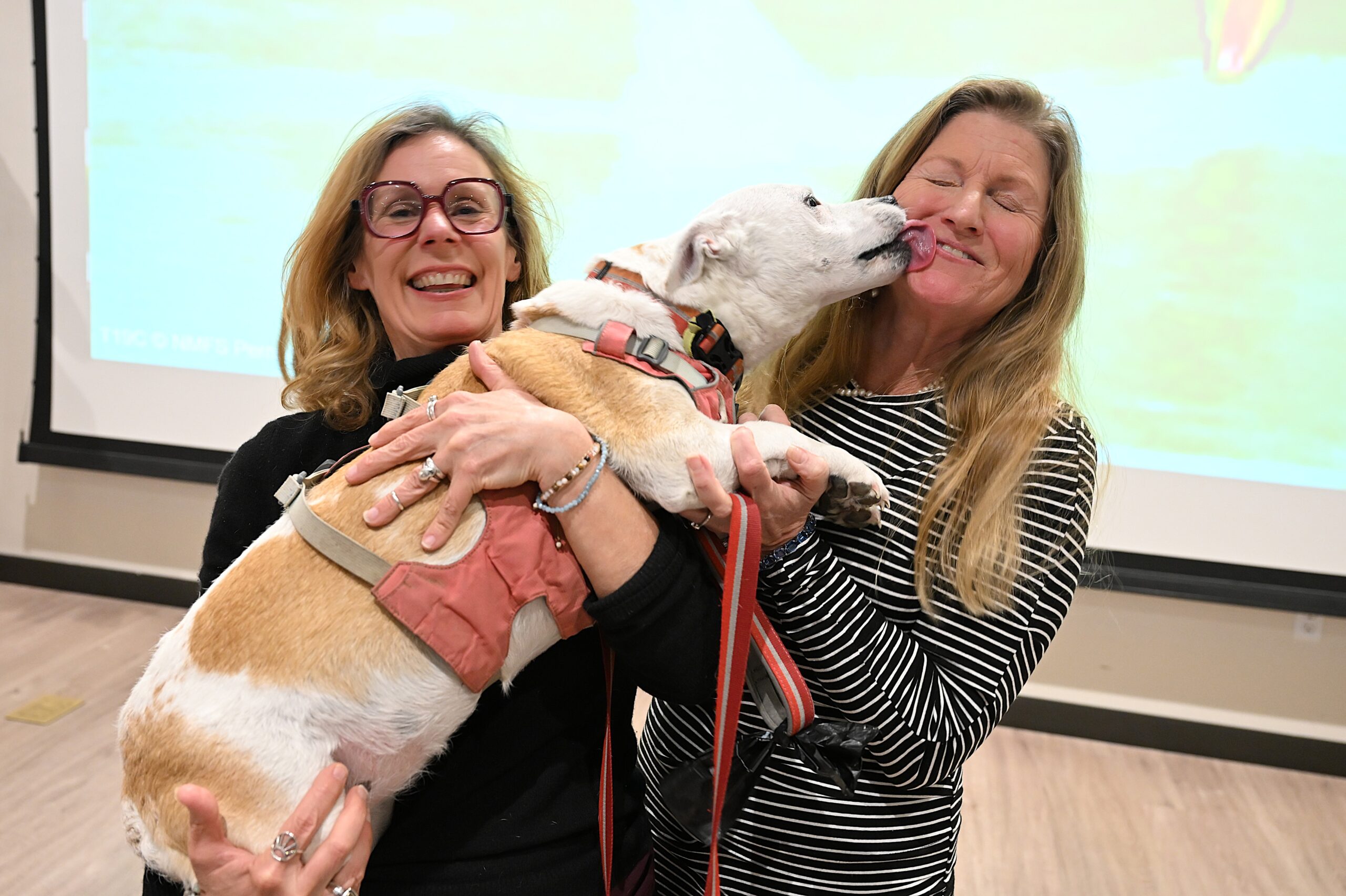
Eba, who was rescued by Giles from the streets of Sacramento, travels with Giles and her colleagues on board a research vessel throughout the Salish Sea. When she detects the odor of floating killer whale scat, her body stiffens and her nose points downward in the direction of the feces. With an acute focus on Eba’s body language, Giles communicates with the vessel’s captain to turn around to locate and scoop up the sample, which is sent to a lab on San Juan Island for analysis.
Data from the scat samples can determine species, sex, reproductive status, nutrition status, toxin levels, stress hormone levels and more, helping SRKW researchers get a real-time, comprehensive understanding of the animal’s health. Giles’ translates this information into actionable knowledge for both the public and policymakers with the goal of bolstering killer whale health and overall populations in the future.

Real first and last names — as well as city of residence — are required for all commenters.
This is so we can verify your identity before approving your comment.
By commenting here you agree to abide by our Code of Conduct. Please read our code at the bottom of this page before commenting.