
Will you chip in to support our nonprofit newsroom with a donation today? Yes, I want to support My Lynnwood News!
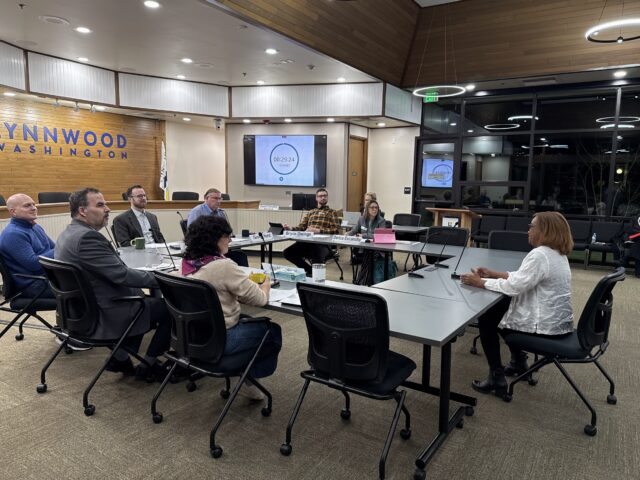
The Lynnwood City Council on Monday interviewed 10 candidates for the vacant Position 6 council seat vacated by Mayor George Hurst in the recent election. Councilmembers will vote to appoint a candidate to the seat Jan. 26.
Each candidate answered six questions, one from each Councilmember about some of Lynnwood’s most pressing topics, including budget, the City’s character, how they handle criticism and their knowledge of City operations. Candidates brought a range of professional experience, including engineers, scientists, state employees, City commissioners and business owners.
A recording of the full interview process is available on the City’s website.
Each candidate answered the following questions:
- Question 1, Councilmember Isabel Mata: What unique perspective do you bring that is missing from the council?
- Question 2, Councilmember David Parshall: Which city department are you least familiar with, and how will you learn more?
- Question 3, Councilmember Robert Leutwyler: Describe your understanding of Lynnwood’s budget. How are you prepared to hit the ground running and make challenging decisions?
- Question 4, Council President Nick Coelho: Which characteristics of Lynnwood are worth protecting, and which are not?
- Question 5, Councilmember Bryce Owings: Why didn’t you run in the November 2025 election?
- Question 6, Council Vice President Derica Escamilla: Describe a time you were publicly criticized or politically isolated for doing something you believed was right. How did you handle the pressure, consequences and people affected by your decisions?
Jacob Berger
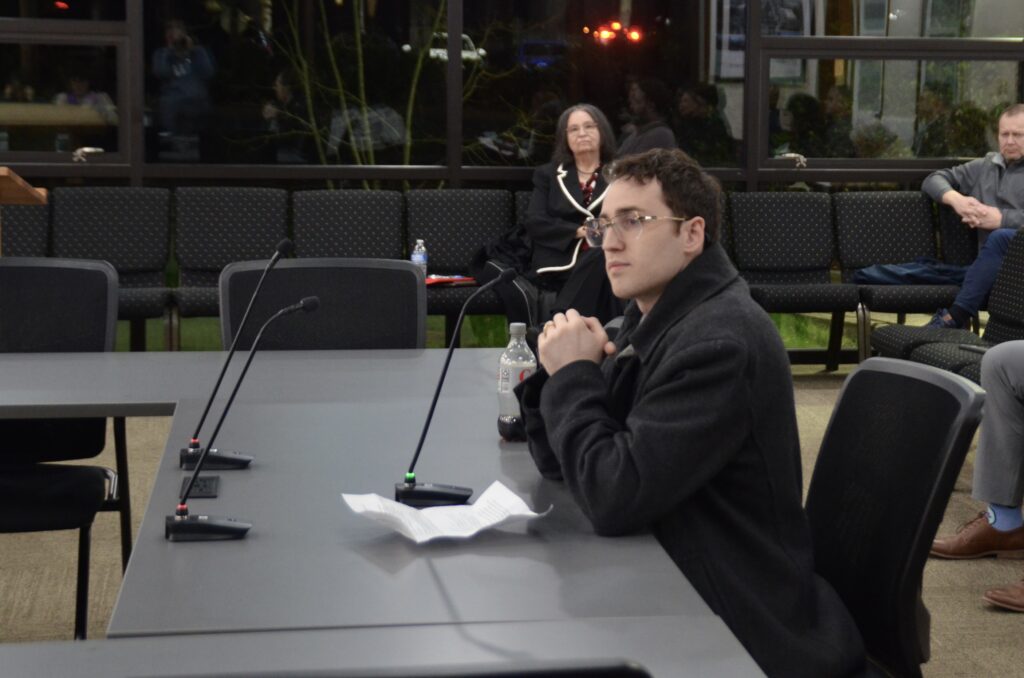
Jacob Berger is a senior propulsion engineer for Boeing in Everett and serves on the Northwest Council of the Society of Professional Engineering Employees in Aerospace. Previously, he was an engineer for Lockheed Martin and holds bachelor’s degree in aerospace from Pennsylvania State University and a master’s degree in business from Washington University in St. Louis, Missouri.
Berger highlighted his perspective as a union member and renter, noting he would advocate for workers and non-homeowners. He identified the Development and Business Services Department — and , specifically zoning — as his biggest knowledge gap, and said he planned to learn through self-study and meetings. Regarding the budget, Berger acknowledged the $4.8 million deficit and proposed a thorough review of services, potentially through an audit, to identify highly effective cuts while minimizing impact on residents.
He said he wishes to protect the city’s diversity but change its “spread out” nature by increasing density, walkability and access to transit. He said he didn’t run in the last election because he was busy with union contract negotiations, but his schedule has since eased. When asked about handling criticism, he described denying union funds to a friend to comply with policy, later rebuilding trust by clarifying regulations.
“I believe very strongly in workers’ rights,” he said. “Having someone who is a member of a union [on the council] will add a voice which speaks for those members of our community who really do make up the backbone of our city.
Han McDonald
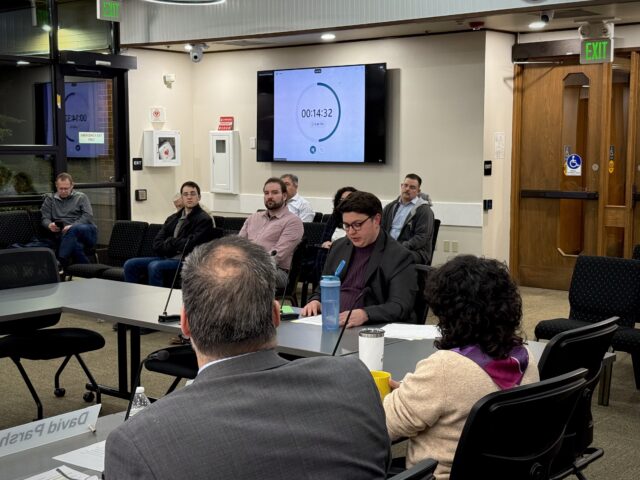
Han McDonald is a program officer at the Allen Institute, managing a multimillion dollar bioscience grant portfolio. They hold a PhD in biochemistry from the University of Washington and completed postdoctoral research at Fred Hutch Cancer Center. Their research has been published in journals including Journal of Cell Biology and Journal of Cell Science. McDonald recently married, bought a first home in Lynnwood, and volunteers mentoring science students and supporting science organizations.
In terms of familiarity with City departments, they also identified Development and Business Services as an area where they could learn more. McDonald said they plan to meet with staff to identify bottlenecks, review reports and the Comprehensive Plan and meet with small developers and homeowners.
McDonald said the budget has a structural gap and proposed aligning spending with outcomes to distinguish cyclical from structural issues and identifying a purpose for every dollar spent. They advocated for protecting Lynnwood’s resilience and neighborliness but rejected a “car-dependent suburban” city model. McDonald said they didn’t run for election because they got married and were in the midst of a major work project at the time. Regarding criticism, they cited the personal challenge of coming out as queer, noting they handled isolation by grounding themselves in values rather than avoiding conflict.
“It would have been easier to be quieter, to make myself smaller, or to bend to other people’s comfort,” McDonald said. Instead, they said they chose to “continue living openly, to advocate for myself and others and center my decisions on what was honest and healthy, not just what avoided criticism that did create conflict.”
Paula Ferreira-Smith
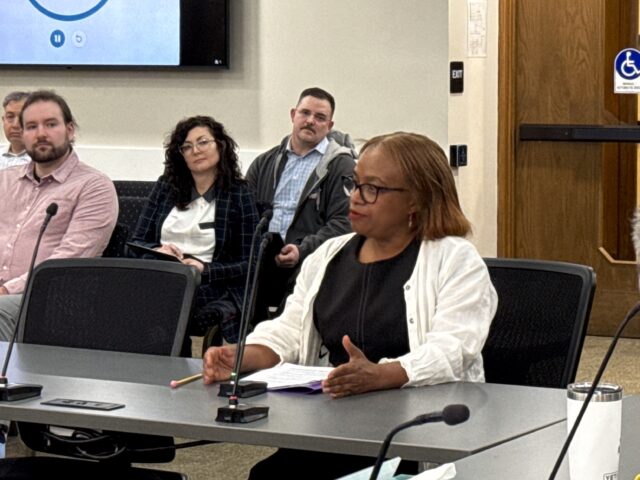
Paula Ferreira-Smith works as a senior right of way agent for the City of Seattle. She specializes in relocation for federal, state and local projects, bringing experience with federally funded projects and displacement. Throughout her career, Ferreira-Smith relocated 53 families during low-income housing improvements and worked on projects across the U.S. Ferreira-Smith also holds a bachelor’s degree in business administration from O&M University in Santo Domingo, Dominican Republic.
She said she’s least familiar with Parks and Recreation and hopes to involve youth in City services. On the budget, she emphasized stewardship and prioritizing essential over deferred costs. She said she wants to protect the city’s diversity and role as a regional hub, aiming to ensure new residents feel they belong. She did not run in the last election because at the time she worked for a City contractor, creating a conflict of interest.
When asked about criticism, she described the difficulties asking people to sell their property for public infrastructure projects, and the bottlenecks it can cause in major projects when someone is hesitant to relocate. Through the humanity of connection and direct communication, she’s able to inform people of their major contributions to the betterment of the community for future generations through the sale of their property.
“I bring empathy, compassion and truly care about the individuals in my community. I believe that everyone has the right to dignity and in the inherent value of the individual person,” Ferreira-Smith said. “When I work on a file, for me it’s not a file number, it’s a person.”
Quinn Van Order
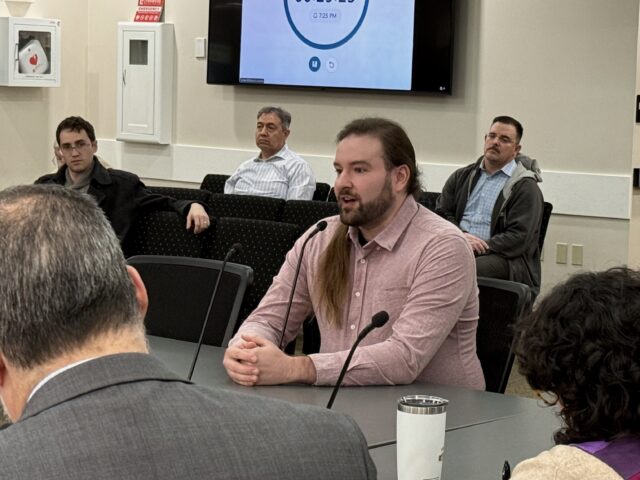
Quinn Van Order is a senior systems engineer at CARIAD, Inc., Volkswagen’s automotive software company. He’s a member of Lynnwood’s Parks and Recreation Board and previously worked as a systems engineer for Funko and Starbucks. He’s also in the process of earning a bachelor’s in computer science from Western Governors University. He said he’s eager to learn more about Lynnwood’s Development and Business Services, particularly because of its significant impact on City revenue. He described the City’s budget situation as a “fiscal cliff” caused by the City using expired grants on recurring expenses and optimistic forecasting.
Van Order said residents’ civic engagement is something the City should preserve. As an outspoken advocate against Lynnwood Police Department’s usage of Flock cameras, he said the City should not focus on mass surveillance. He said he always planned to run for local office eventually, but the Flock situation prompted him to accelerate involvement. Upon becoming a board member of a previously inactive neighborhood association, he found the group’s building was depleting with no budget for improvements, prompting him to make difficult and often unpopular decisions. However, through clear communication and data-driven decision making, the neighborhood council unanimously approved his funding proposal.
“My political awakening was the cheerful day of Sept. 11, 2001 when the world introduced itself to me, with its direct and visceral consequences,” Van Order said.
Local government has “a lot of control over our populace,” he said. “We have a lot of impact on their lives. But at the same time, we need to recognize where that should stop, and where residents’ private lives should remain private.”
Chelsea Wright
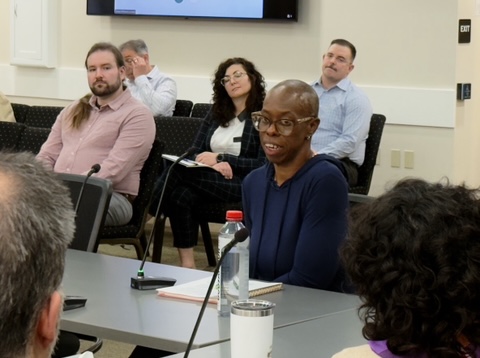
This is Chelsea Wright’s second time applying to fill a vacant council seat after seeking the Position 5 spot last year that is now held by Councilmember Leutwyler. She is a work equity research specialist for the Washington Department of Labor and Industries and a member of Lynnwood’s Diversity, Equity and Inclusion Committee. With a bachelor’s degree in public health, Wright is involved in two local sorority chapters, serving as the president of Sigma Gamma Rho. She highlighted her skills in contracts and procurement from working for the state, which would translate well to the Council.
She identified Public Works as the department she wants to learn more about, and would do so through tours and staff meetings. To address the budget deficit, she proposed a deep dive into financial forecasting errors and soliciting resident feedback. She said she values Lynnwood’s “little big city” feel and walkability but opposes over-policing, stating that some residents, specifically unhoused people, say they feel unheard by City leadership.
She did not run in the last election to avoid being labeled merely as a “diversity applicant,” which she said is how people described her when she applied in 2025. Instead, she applied for the vacancy to focus on her policy positions and professional background. Regarding criticism, she described maintaining professionalism with a critical supervisor while documenting evidence to defend her decisions.
Wright said a councilmember should be balanced, honest, committed, motivated and experienced, keeping public interest at the core of everything they do.
“If [a councilmember] is agenda-driven or power hungry or captive to a special-interest agenda, they will not perform their duties with integrity and a broader vision of what the interest of the overall community is and now and for the future,” she said.
Noel Baca
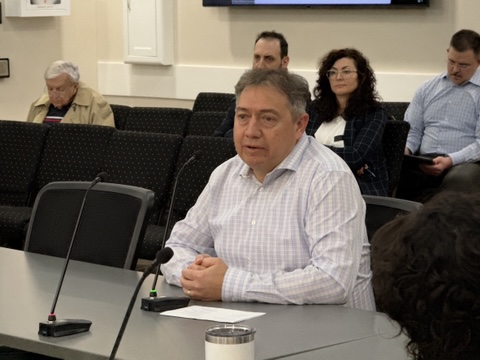
As a civil engineer with over 20 years in the construction industry, Noel Baca said he brings technical expertise in infrastructure and an analytical approach to problem-solving. He works as the superintendent of Chinn Construction, holding a bachelor’s degree in civil engineering from New Mexico State University. He’s a member of the City’s Planning Commission, a state-licensed structural engineer and has lived in Lynnwood for 30 years with his family.
He said he’s least familiar with Lynnwood’s Finance Department, specifically tax revenue forecasting, and plans to work with the Finance Committee to improve his understanding. To address the budget, he proposed quantifying the gap and prioritizing essential services.
He expressed a desire to protect Lynnwood’s community-centered and small town feel while balancing City Center growth. His reasoning for not running for election was because he was focused on his work with the Planning Commission, but decided to take a chance at Council when the opportunity presented itself. Baca recalled handling hostile public forums early in his career by using education and sincerity to find common ground.
“I think being able to meet on common ground and come from a place of education and sincerity, even if it doesn’t change people’s minds, lends itself to finding a space where we can understand each other,” Baca said.
Richard Wright
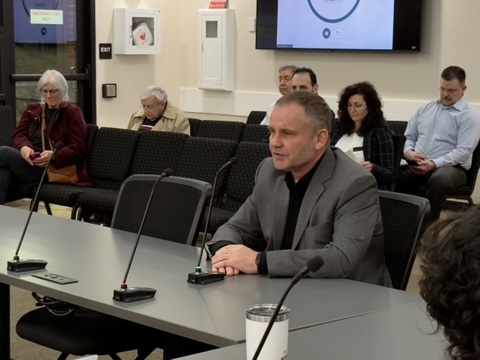
Richard Wright is a construction project manager and former Planning Commission Chair. He said he brings institutional knowledge and views himself as a representative of the citizens. He has lifelong connections to the area, but moved to Lynnwood with his family in the 1980s. He formerly served as a 3rd District representative for the Snohomish County Council, contributing to the County campus redevelopment initiative. He’s also a former industry Advisory Board Chairman for Edmonds College construction and helped secure a $500,000 grant for the college’s construction center.
He expressed a desire to learn more about public safety in Lynnwood through ride-alongs with police to see what their needs and challenges are. On the budget, he suggested discussing levels of service and diversifying the revenue base to avoid economic volatility. He said he wants to protect Lynnwood’s diverse retail base but shed the city’s image as a “strip mall community”. He did not run because he has no interest in campaigning, stating he’s committed to serving as a “caretaker” rather than a politician. As an example of when he faced criticism, he cited filing an ethics complaint against a previous mayor and local candidates who he respected and shared political beliefs with, but found they were violating policies.
“As far as consequences, I don’t necessarily worry about consequences if I feel the actions are right,” he said.
Cathy Baylor
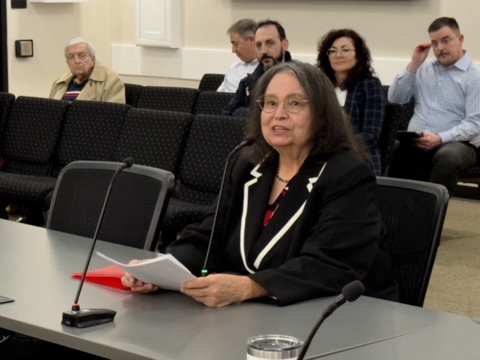
Cathy Baylor is a small business owner, operating her own piano studio and she previously served as president of the Federation of Democratic Women Salish Sea chapter. As a descendant of local native tribal leaders with experience as a caretaker for elderly family members, Baylor said she offers an arts background and the perspective of a senior citizen and caregiver.
She said she plans to study capital planning within the Public Works department, using available training resources and working with staff. Regarding the budget, she cited specific deficit figures and emphasized transparency and accountability. Baylor values the City’s cultural “mixed salad” but wants to move away from its past “monolithic” culture. She said did not run previously because she was the primary caregiver for her mother prior to her death. In the past, she noted that she faced criticism for endorsing an unpopular local candidate, stating she stood by her vetting process and prioritizing the facts and in-depth research, despite differing opinions of those who normally agree with her politically.
“I have learned that criticism often reflects deeply held values, and those feelings deserve to be heard, even when decisions don’t change,” Baylor said. “Public service often requires choosing the best available decision, rather than a perfect or popular one.”
Dorina Katro
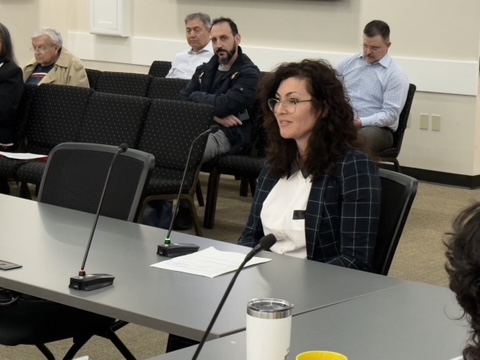
Dorino Katro has been an accountant for more than 15 years. She said she has a background managing large project budgets and an immigrant perspective, having moved to Washington from Albania in the 2010s. She’s currently a development and job cost accountant for Washington Holdings LLC and serves on Lynnwood’s Planning Commission. She also has previous experience in corporate and personal accounting and holds a bachelor’s degree in accounting and finance from the University of Tirana.
The department she’s least familiar with is technical capital planning in Public Works and plans to review performance metrics with staff to get up to speed. To address the budget deficit, she advocated for fiscal discipline and a deep dive into the structural factors of the City’s finances. Katro said she wishes to protect the city’s openness and diversity, but believes resistance to necessary growth is not worth protecting. She did not run previously, stating she felt she could contribute more effectively on the Planning Commission at the time. She described handling criticism during unpopular system upgrades by remaining calm and explaining her reasoning.
Brandon Molina
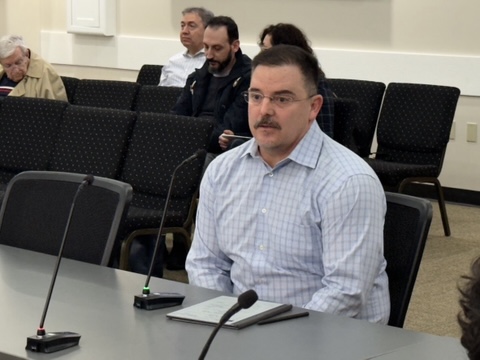
Brandon Molina is the owner of Peace of Mind Brewing in Lynnwood and has previous experience as a software engineering director for Mutual of Enumclaw. He said he offers a technology background and experience as a “glue teammate” who unifies groups. He moved to Lynnwood from Colorado with his family in 2001, and has a bachelor’s in computer information systems from Colorado State University, Pueblo.
He said he plans to learn more about Lynnwood’s Finance Department by understanding their scorecards and metrics. On the budget, he emphasized collaboration and using dashboards to track progress. He said Lynnwood’s status as a “Hub City” is something he’d like to protect, but believes the suburban nature must evolve to accept density. He said he didn’t have time to run for election due to the demands of his business. In terms of facing public criticism, Molina recounted revoking a popular four-day work schedule because it hurt productivity, standing by the unpopular decision for the team’s benefit.
“Sometimes you really have to put down your ego and ask those hard questions to come up with good answers and not take it personal,” Molina said. He noted that as a brewery owner, he has a special connection with the community, serving thousands of people every week.
“I have access to a lot of people,” he said. “They put their guard down, we chat, we have conversations…Owning this business has really opened up a lot more of Lynnwood to me, more of the impact we need, and as a small business owner, the actual changes we need to continue growing this city.”
— Contact Ashley at ashley@myedmondsnews.com.


Real first and last names — as well as city of residence — are required for all commenters.
This is so we can verify your identity before approving your comment.
By commenting here you agree to abide by our Code of Conduct. Please read our code at the bottom of this page before commenting.