
Will you chip in to support our nonprofit newsroom with a donation today? Yes, I want to support My Lynnwood News!
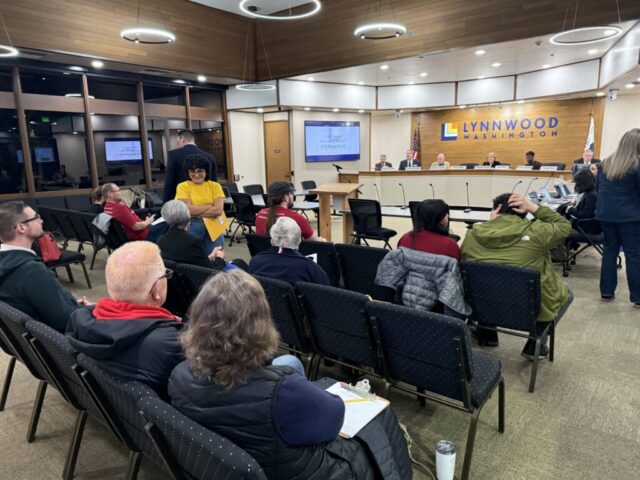
The Lynnwood City Council at its Nov. 24 meeting rejected a 53% property tax levy increase for 2026, instead adopting an 23% increase, or a $8.9 million property tax levy.
This is estimated to generate an additional $1 million toward the city’s projected $8 million 2026 general fund deficit. The motion is set to increase the City’s property tax levy by 23%, down from the 53% increase initially proposed by staff.
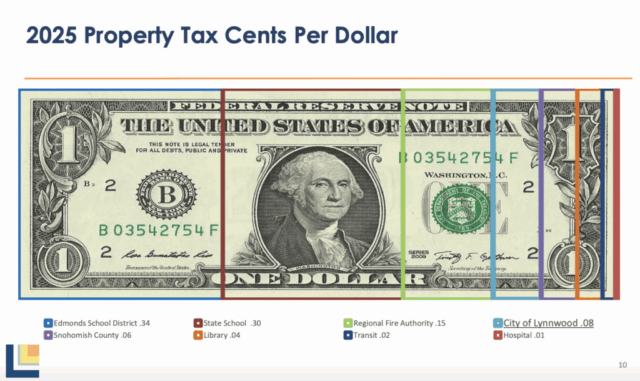
This ordinance will increase Lynnwood’s 2025 rate from $0.67 per $1,000 assessed value to $0.77. For the average home assessed at about $660,000, this will increase property taxes from $424 to $508 in 2026 (an $84 increase).
Per state law, all cities are required to certify their 2026 property tax before the end of November.
The council-approved amount is lower than the initial motion proposing the City collect an $11 million levy, the maximum levy amount allowed by state law (also known as banked capacity). Councilmember George Hurst, set to replace Mayor Christine Frizzell in January, proposed the amendment. Councilmembers Derica Escamilla, Robert Leutwyler and Patrick Decker voted in favor and Councilmembers Nick Coelho, David Parshall and Josh Binda voted against. The move comes almost a year after Lynnwood approved a 52% property tax levy increase for 2025.
If the Council voted to collect full banked capacity, per state law it could only increase future levies by 1% annually, or up to the state’s inflation rate — whichever is lower. Any increase over that would have to go on a ballot for voter approval.
Hurst expressed concern over collecting full banked capacity and limiting the City to a 1% increase. By approving Hurst’s amended motion, the City is set to collect $8.9 million of the allowable $11 million, leaving the City $2.1 million to collect at a future date. This also gives next year’s mayor and Council more time to come up with new, long-term revenue sources and budget-balancing mechanisms, Hurst said.
A more detailed report will be published at a later time.
View the full ordinance here.
See your property tax bill distribution at the Snohomish County Assessor’s Office website.
— Contact Ashley at ashley@myedmondsnews.com.

Real first and last names — as well as city of residence — are required for all commenters.
This is so we can verify your identity before approving your comment.
By commenting here you agree to abide by our Code of Conduct. Please read our code at the bottom of this page before commenting.