
Will you chip in to support our nonprofit newsroom with a donation today? Yes, I want to support My Lynnwood News!
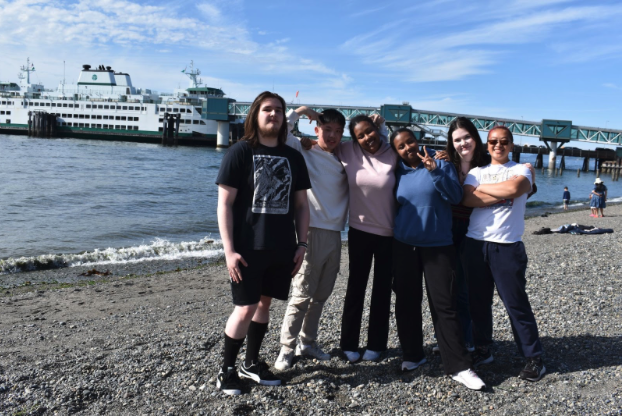
Fifty local high school students gathered last week at the Edmonds Waterfront Center to discuss environmental issues and propose solutions.
During the opening program for the third annual Edmonds Youth Environmental Summit May 30, Edmonds City Councilmember Susan Paine underlined the importance of youth presence in local elections. Under state law, individuals can register to vote starting at age 16, and 17-year-olds can vote in primary elections as long as they turn 18 before the general election.
Paine explained that most of the people making decisions in Edmonds politics won’t be around for the future impacts of those decisions. “It’s super critical that we have the vote and the voice of our younger people,” she said. “These plans that we’re putting together now will impact their future.”
Following open remarks, students had a choice of attending seven workshops, split into two sessions.
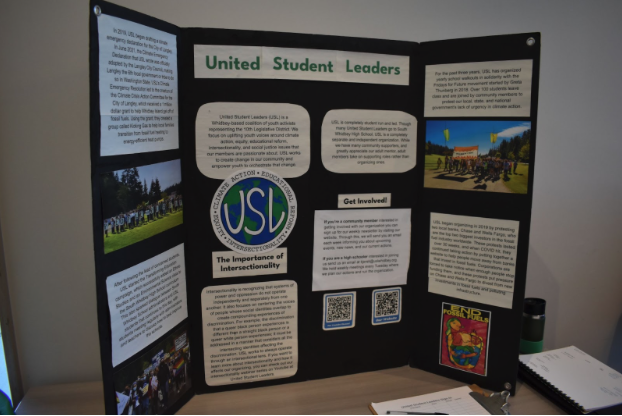
In the Youth Led Climate Action workshop, students saw firsthand how they could make an impact in their communities. Members of United Student Leaders of Whidbey Island facilitated the workshop, which encouraged students to get involved with their school boards and local government to promote positive change. Kjersti Ringsrund explained that young people can use their voice to put pressure on those with the budget and power to make a difference. “I see a lot of people my age underestimate the power they have over their elected representatives,” Ringsrund said.
In the Breaking News, Wildlife Issues and Sharing Habitats workshop, Kelsey Fairhurst, the education coordinator at the Progressive Animal Welfare Society (PAWS) explained her organization’s mission and services. PAWS has three main branches – education, animal shelters and wildlife rehabilitation. Fairhurst described the different jobs at PAWS and explained how to get into the field and what actions to take if you encounter injured wildlife.
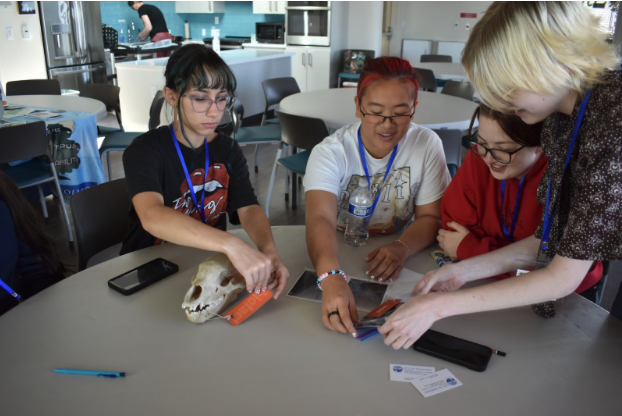
In the Bussin’ Basics workshop, Natalie Lawrence of Community Transit highlighted the importance of public transportation, informed students of their right to free youth ORCA cards and talked about bus etiquette and safety.
Lawrence mentioned that besides being much more environmentally sustainable than driving, public transportation also gives riders the freedom to read, play on their phones and socialize. “Your time is your own when using public transportation,” Lawrence said.
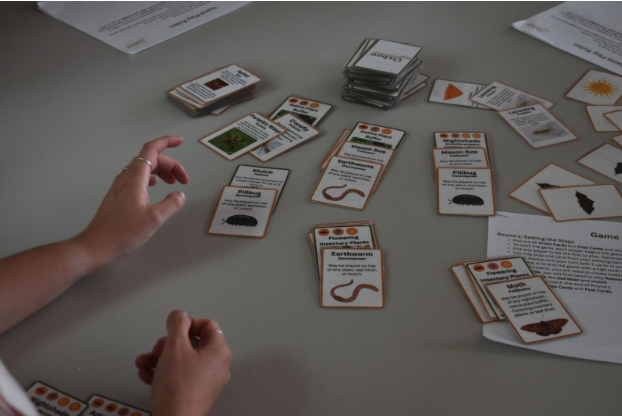
As part of the Beyond Pollinators: Fostering Habitat Beneficial for Invertebrates, educators from Oxbow Farm & Conservation Center used card games to teach the teens about biodiversity. By introducing different plants, insects and worms to various habitats, players created balanced, healthy ecosystems.
During Nature Detectives: Tracking the Birds of Edmonds Marsh, local birder Frank Caruso led a group of students to the Edmonds Marsh, where they borrowed binoculars to catch a glimpse of local fauna. In part due to a historically low tide, there wasn’t much bird activity. Nonetheless, students had good views of crows and swallows.
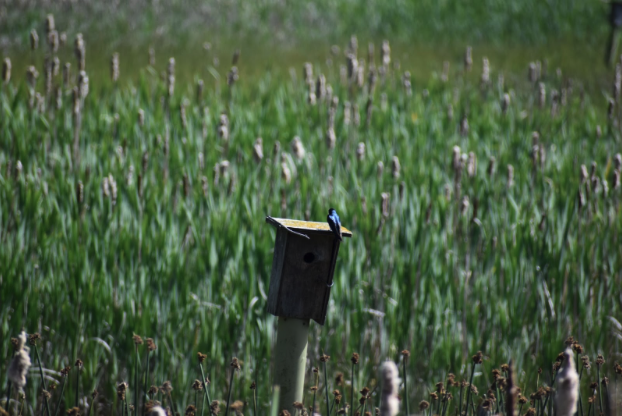
Representatives from Cascadia College talked about the importance of wetlands and pH levels in the Water Pollution and its Dangers workshop. Wetlands are essential to water quality, flood control, biodiversity and climate change mitigation. Yet wetland destruction — which is occurring 17 times faster than deforestation — is rarely discussed. That’s why Cascadia is proud to boast one of the West Coast’s largest wetland restoration projects.
“We can really rewild places if we have the time, money and resources,” said Stephen Classen, assistant director of sustainable practices at Cascadia.
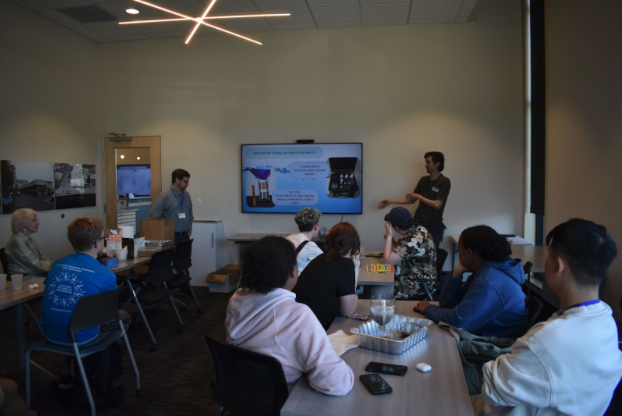
During a conversation surrounding Fast Fashion & its Impacts, students discussed the dangerous resource use and waste produced by trends-based overproduction in the clothing industry. The teens, along with conversation facilitators, worked to brainstorm impactful actions they could take to counter such a pervasive trend. One student proposed in-school mending workshops where students can gather to repair and customize the clothing that they already own — rather than go out and buy the next new thing — in a communal, conversational setting.
The conversation really took off when someone mentioned graduation gowns. This year, approximately 1400 students will graduate from the Edmonds School District, and most of them will be wearing a brand-new polyester cap and gown that will end up in their closet or a landfill immediately following the ceremony. The solution came quickly to the group of teens. They proposed standardized gown-lending programs within their school, so that all graduates — not just those with financial need — would rent or borrow gowns that could then be reused annually to eliminate excessive waste.
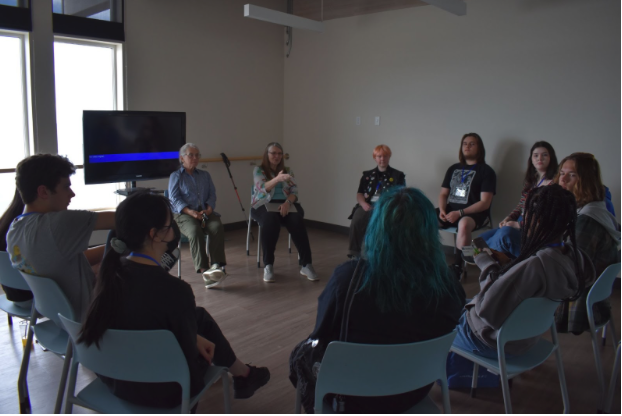
The students were grateful to have Edmonds School Board member Thom Garrard present to guide them in their next steps.
“Talking to a school board member was really important to us,” said Miliah Gaswint, a Lynnwood High School student who participated in planning the event. “It helped us to know that we were being heard and our solutions were reasonable.”
At the end of the event, Gaswint encouraged students to participate in the drafting of a letter to the Edmonds City Council, calling for the city to take specific actions regarding the climate crisis. Proposals included the official declaration of a climate emergency, increased environmental education for the public, wetland protection measures like runoff pollution prevention, recycling programs for unconventional materials and the inclusion of at least one youth voice in committee at all times.

Real first and last names — as well as city of residence — are required for all commenters.
This is so we can verify your identity before approving your comment.
By commenting here you agree to abide by our Code of Conduct. Please read our code at the bottom of this page before commenting.