
Will you chip in to support our nonprofit newsroom with a donation today? Yes, I want to support My Lynnwood News!
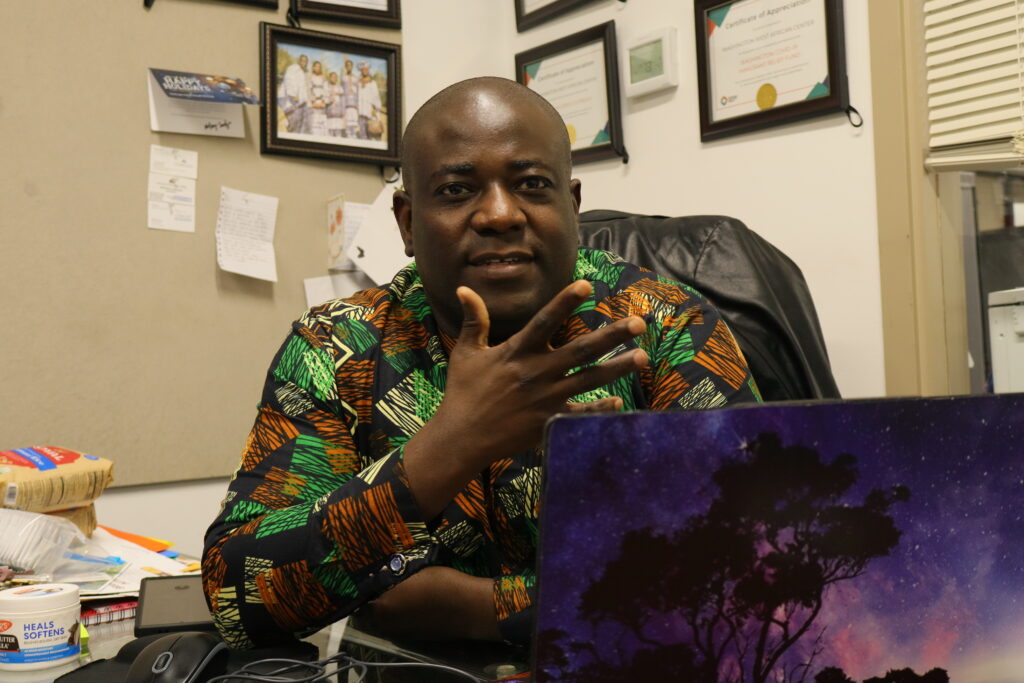
During a Tuesday afternoon at the Lynnwood-based Washington West African Center, about 10 people were working on various tasks. Case managers were on the phone, helping people make medical appointments, and a graphic designer was creating a social media flyer. However, Executive Director Pa Ousman Joof said that the center used to be “very lively and full” with at least twice the number of staff.
“You can see how quiet it is right now,” he said.
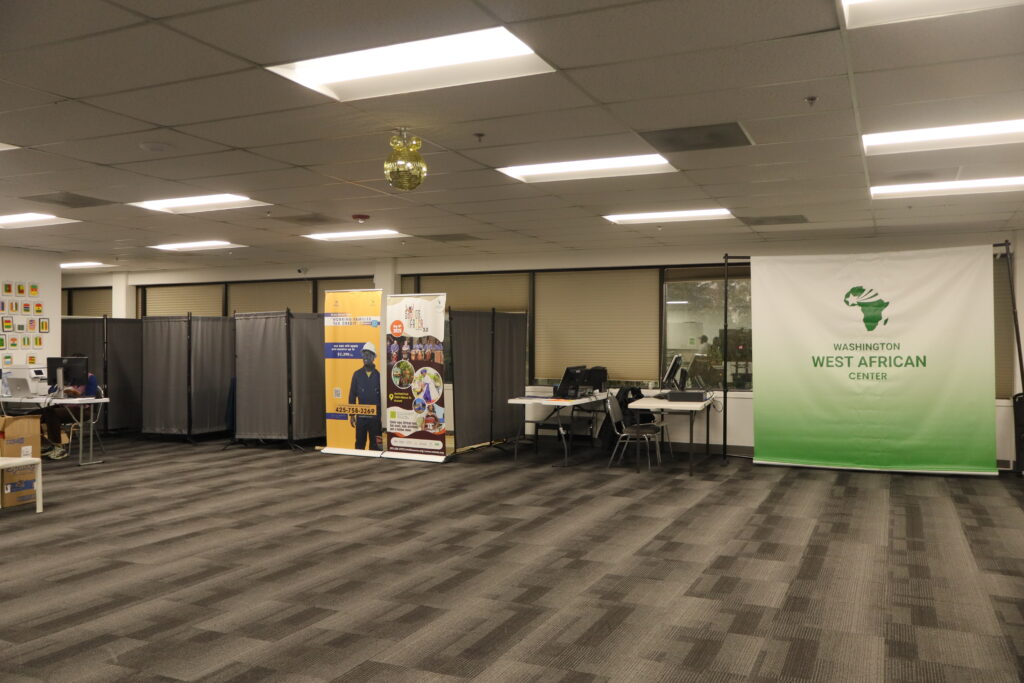
The West African Center is facing a funding shortfall, operating on less than 5% of the 2024 budget of nearly $1.4 million, according to Joof. “We have $19,845 in our account for operation,” he said.
He said that federal policy shifts have pushed national and local institutions away from supporting immigrant-led organizations like the center. As a result, the center has reduced or discontinued some of its services. After-school programs for children were eliminated, an in-person English as a Second Language (ESL) program became virtual and food distribution was reduced from twice a week to once a month.
“A lot of the funding partners we have and people that showed so much interest to support communities like us that were marginalized had good intentions after the death of George Floyd, the emergence of Black Lives Matter and COVID,” Joof said. “With the coming of President Donald Trump, this is changing and shifting.”
Joof said that federal policies now emphasize English as the official language and relaxes requirements for language interpretation services, especially for organizations connected to federal funding. He said those changes trickled down to hospitals, courts, local governments, contractors, and even philanthropic organizations where many quietly retreated from DEI- and immigrant-focused work to “stay in compliance” and avoid being on the “government’s radar.”
“If it is in the court, if our people [are] wrongfully convicted, [it’s] because we don’t have access to interpreters,” Joof said. “If it is in the hospital settings, [they would be] wrongly diagnosed because you are talking to a person who cannot communicate what they are feeling and what they are going through.”
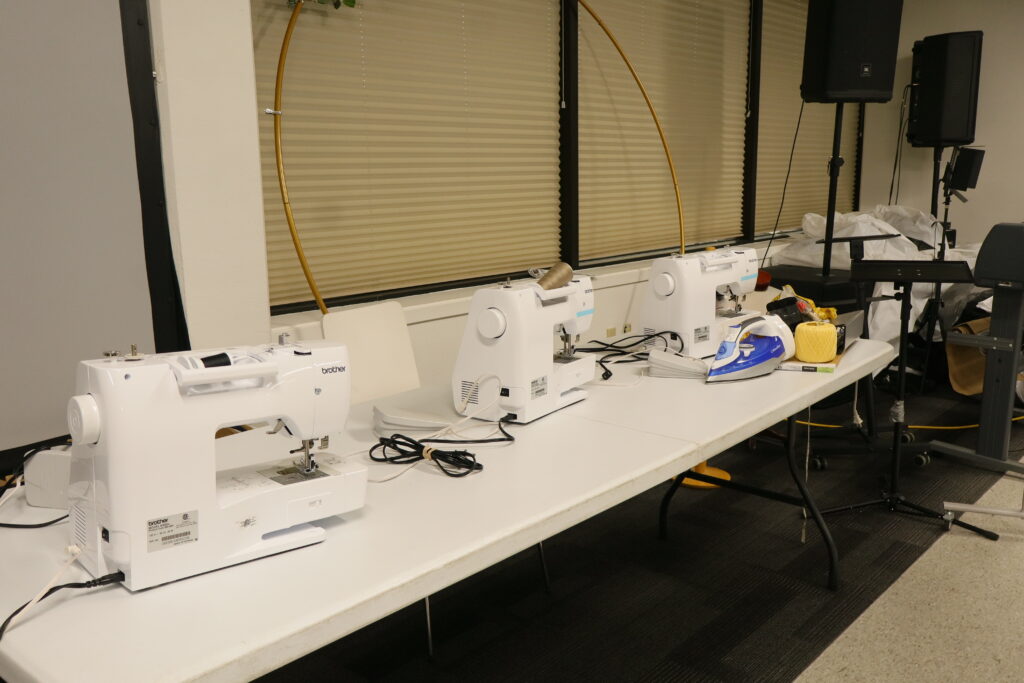
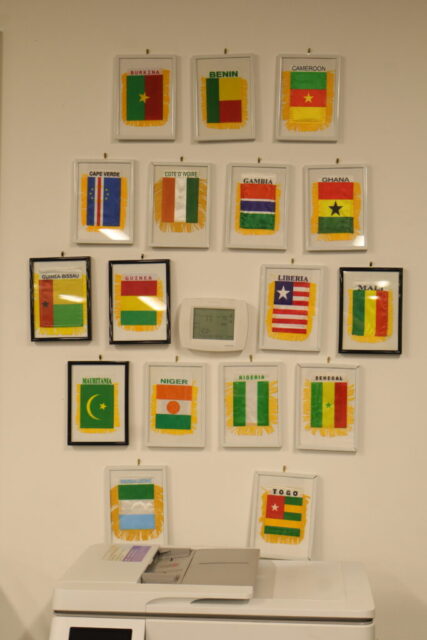
The Washington West African Center serves more than 20,000 West Africans in Snohomish, King and Pierce Counties, offering after-school programs for children, ESL and sewing classes for adults, free tax and notary services and more. Joof said the center also provides these services for non-West Africans, such as those from Ethiopia, Ukraine and Latin America. The center’s staff also provides language support services, including Spanish, Korean, Hausa and Quechua.
“We have the senior support for the grandmas [from West Africa] who are isolated, who don’t speak, read or write English, who don’t know how to use a lot of the equipment that they find in America,” Joof said. “Because everything they did back home, they did with their hands…everything they did is using firewood. Here they have to use electric kettles, electric stove, electric everything, microwave. We teach them these little things.”
Originally from Gambia, Joof started the West African Center in his living room in Everett in 2017 based on his own lived experience as a West African immigrant. Although he has lived in the U.S. for 22 years, he said he became a U.S. citizen in 2022. He lived in various states, including Georgia and Alaska, before he finally settled in Marysville.
Joof said he was arrested and detained by the U.S. Immigration and Customs Enforcement in Atlanta, Georgia in 2008 for missing a court date. After he was released, he wore a monitoring bracelet for nine months.
“I have changed work permits over 10 times, paying over $300 every year to renew my employment authorization,” he said. “I was almost made a criminal by immigration based on the probation and conditions that they put on me. I’ve never had any criminal history. So I felt discriminated. I felt the system targeted me, tried to break me down. If I had reacted in any way different than what the system expected, I would have been labeled for all the things: This Muslim, this immigrant, this African, this Black man. That’s what the system does to us.”
Joof said that many immigrants whom the West African Center serves are afraid to go out of their homes to receive services. He told a story of a young West African man who was scheduled to report to immigration in late December.
“If he goes, he stands in terms of being arrested. If he doesn’t go, he breaks his reporting requirement,” Joof said. “He’s in that dilemma based on the systems and the things that they have in place. These are exactly the reasons why I set up the center.”

Solutions
Despite the setbacks, Joof has developed strategies that may help the West African Center continue providing its services. One is having a monthly “sougou,” which is Bambara for “market,” where people can sell donated goods to generate revenue. Bambara is a West African language primarily used in Mali and Côte d’Ivoire as a lingua franca.
There will also be a fundraiser on Jan.31 to help raise $150,000 to support after-school, food and housing programs.
He said that volunteers and moral support are just as important as money. “Immigrants are not criminals,” Joof said. “We are here. We are hard-working people. We are responsible people. We are contributing meaningfully to the development of this country and to the society. We need the voice of the community to stand by us, to be with us, to reject some of the rhetorics that are thrown at us.”
Donations can be made at the Washington West African Center website. Volunteers can fill out an online form.

Real first and last names — as well as city of residence — are required for all commenters.
This is so we can verify your identity before approving your comment.
By commenting here you agree to abide by our Code of Conduct. Please read our code at the bottom of this page before commenting.